Introduction
The hotel industry is one of the most competitive markets online. Travelers search on Google every day for hotels, resorts, vacation stays, and luxury accommodations, but only businesses with strong SEO visibility attract consistent booking inquiries.
Many hotels spend heavily on paid ads and third-party booking platforms but still struggle with:
- Low direct bookings
- High commission fees
- Poor Google visibility
- Low website traffic
- Inconsistent lead generation
One growing hotel business approached HT Business Group after facing declining organic traffic and low direct booking inquiries despite offering premium accommodations and excellent guest experiences.
The hotel wanted to reduce dependency on expensive booking platforms and generate more direct booking leads through SEO.
What This Case Study Covers
This hotel SEO case study explains:
- The challenges the hotel faced
- Our complete hotel SEO strategy
- Technical SEO improvements
- Local SEO optimization methods
- Hotel content marketing strategies
- Conversion rate optimization improvements
- Keyword ranking growth
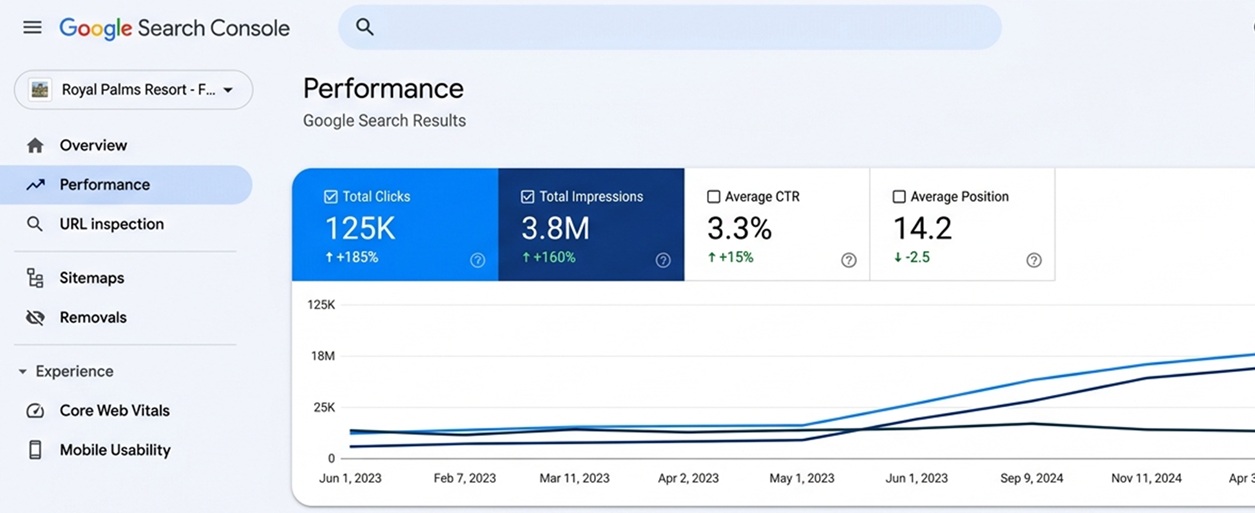
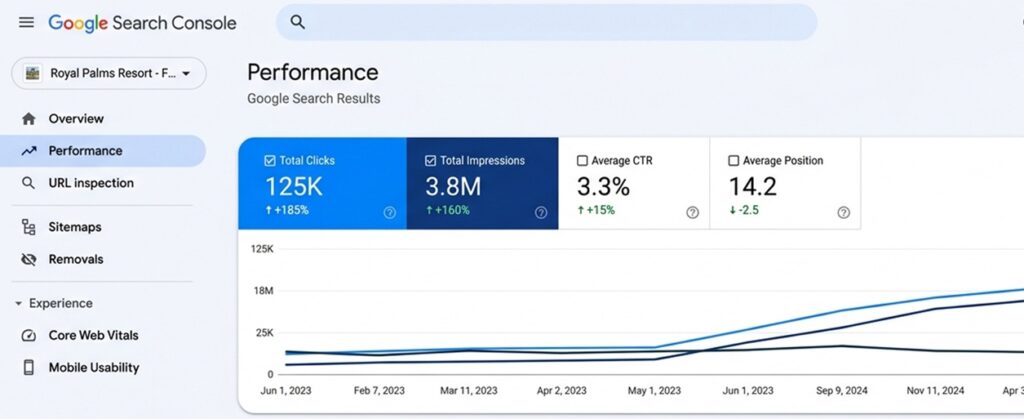
- How hotel booking leads increased by 320%
Quick Case Study Snapshot
| Category | Details |
| Industry | Hospitality / Hotel |
| Services | Hotel Booking & Accommodation |
| Goal | Increase Direct Booking Leads |
| Main Challenge | Low Organic Visibility |
| SEO Strategy | Technical SEO + Local SEO + Content Marketing |
| Results | 320% Increase in Booking Leads |
| Timeline | 6–12 Months |
| Location | Florida |
About the Client
The client was an established hotel business operating in a highly competitive hospitality market. The hotel had built a strong reputation offline by providing premium accommodations, excellent guest experiences, and high-quality hospitality services.
Over the years, the business became well known for:
- Comfortable luxury stays
- Professional customer service
- Clean and modern facilities
- Prime location advantages
- Exceptional guest satisfaction
Despite having a strong offline reputation, the hotel struggled to build a strong online presence.
The business relied heavily on:
- Third-party booking platforms
- Paid advertising campaigns
- Referral bookings
- Repeat customers
for generating reservations and inquiries.
Although the hotel offered premium services and competitive pricing, its website was not generating enough direct hotel booking leads organically.
The company faced several online growth challenges, including:
- Low Google visibility
- Weak organic traffic
- Poor local SEO performance
- Limited direct bookings
- High commission dependency on OTAs
- Low keyword rankings for hotel searches
The hotel management realized that modern travelers increasingly search online before booking accommodations. Without strong hotel website SEO and local search visibility, the business was losing potential customers to competitors ranking higher on Google.
To improve online growth, the company partnered with HT Business Group to create a long-term hotel SEO strategy focused on increasing:
- Organic hotel bookings
- Direct reservation inquiries
- Search engine visibility
- Local SEO performance
- Website traffic from travelers
The primary objective was to transform the hotel website into a powerful hotel booking lead generation platform capable of attracting consistent organic traffic and direct bookings.
Hotel Services Offered
The hotel offered a wide range of hospitality services designed to meet the needs of different types of travelers.
These services included:
Luxury Rooms
The hotel provided premium luxury accommodations with modern amenities, comfortable interiors, and personalized guest experiences.
The luxury room offerings included:
- Premium suites
- Executive rooms
- Ocean or city views
- Modern room facilities
- High-end guest services
These accommodations were designed for travelers looking for comfort, convenience, and a premium hospitality experience.
Vacation Stays
The hotel also specialized in vacation accommodations for tourists and leisure travelers.
The vacation stay services included:
- Family vacation packages
- Weekend getaway stays
- Holiday accommodations
- Tourist-friendly services
- Resort-style experiences
The business targeted travelers looking for relaxing and comfortable vacation experiences in a prime location.
Family Accommodations
The hotel offered family-friendly accommodations designed to provide convenience and comfort for group travelers and families.
Family accommodation services included:
- Large family rooms
- Connected room options
- Child-friendly amenities
- Dining and recreational facilities
- Comfortable long-stay options
These services helped attract family travelers searching for safe and convenient hotel stays.
Business Travel Bookings
The hotel also catered to corporate and business travelers.
Business travel services included:
- Executive rooms
- Business meeting facilities
- High-speed internet access
- Conference room access
- Corporate booking support
The business wanted to improve visibility for travelers searching online for business hotels and corporate accommodations.
Event and Conference Hosting
In addition to room bookings, the hotel also offered event and conference hosting services.
These included:
- Corporate events
- Business conferences
- Private events
- Wedding hosting
- Meeting spaces
The hotel wanted to increase inquiries for these hospitality services through local SEO and organic search visibility.
Target Audience
The hotel served multiple customer segments across both domestic and international travel markets.
Understanding the target audience played an important role in developing an effective hotel booking SEO strategy.
The SEO campaign focused on attracting highly targeted travelers actively searching online for accommodations and hospitality services.
Tourists
Tourists searching for hotels in the local area were one of the hotel’s primary customer groups.
The SEO strategy targeted users searching for:
- Hotels near tourist attractions
- Vacation accommodations
- Luxury hotel stays
- Resort experiences
- Local travel accommodations
By improving local SEO for hotels, the business was able to attract more tourism-related booking inquiries.
Vacation Travelers
Vacation travelers were another major audience segment.
These users typically searched for:
- Family vacation hotels
- Beach resorts
- Weekend getaway stays
- Holiday accommodations
- Luxury vacation experiences
The hotel wanted to improve rankings for high-intent hotel booking keywords related to leisure travel and vacation planning.
Business Travelers
Business travelers searching for professional accommodations represented a valuable customer segment.
The SEO strategy targeted searches related to:
- Business hotels
- Conference hotels
- Executive accommodations
- Hotels near business districts
- Corporate travel stays
Optimizing for these search terms helped increase direct booking leads from business travelers.
Families
Families looking for spacious and comfortable hotel accommodations were also an important audience group.
The hotel wanted to rank for searches related to:
- Family-friendly hotels
- Hotels with larger rooms
- Vacation stays for families
- Child-friendly accommodations
This helped attract travelers planning group vacations and family trips.
International Guests
The hotel also attracted international travelers searching online for accommodations before visiting the area.
To improve visibility for international audiences, the SEO campaign focused on:
- Strong Google rankings
- Mobile-friendly booking experience
- Local SEO optimization
- User-focused website improvements
- Fast-loading hotel pages
This improved the hotel’s visibility among global travelers searching for accommodations online.
By understanding the needs and search behavior of these audience groups, HT Business Group developed a targeted hotel digital marketing and SEO strategy designed to increase:
- Organic hotel bookings
- Direct reservation inquiries
- Website traffic growth
- Local search visibility
- Long-term booking lead generation.
Major Challenges the Hotel Faced
Although the hotel offered premium accommodations, excellent guest services, and a strong offline reputation, its online performance was far below its actual business potential.
The hospitality industry is highly competitive, and travelers usually book hotels they discover on Google search results, Google Maps, or hotel booking websites. Unfortunately, the hotel’s website was struggling to compete online.
When the client partnered with HT Business Group, our SEO experts identified several major issues affecting:
- Organic hotel bookings
- Google rankings
- Website traffic
- Local SEO visibility
- Direct booking conversions
These problems were limiting the hotel’s ability to generate consistent booking inquiries organically.
Low Organic Website Traffic
One of the biggest challenges was extremely low organic website traffic.
Despite offering high-quality hospitality services, the hotel website had very limited visibility in search engines. Most travelers searching online for accommodations could not find the hotel on Google.
The website suffered from:
- Minimal search engine visibility
- Weak keyword rankings
- Poor search presence for hotel-related searches
- Limited organic visitor growth
The hotel was heavily dependent on:
- Third-party booking platforms
- Paid advertising
- Referral traffic
instead of generating direct organic hotel bookings through its own website.
Because of weak hotel website SEO, the business was missing valuable traffic from users searching for:
- Hotels near me
- Luxury hotels in the area
- Family-friendly accommodations
- Vacation stays
- Business travel hotels
The lack of organic visibility significantly reduced the number of direct booking inquiries coming from Google search results.
This created long-term growth challenges and increased customer acquisition costs.
Poor Google Rankings
Another major issue was poor Google rankings for competitive hotel-related keywords.
The hotel website was not ranking well for high-intent search terms related to:
- Hotel bookings
- Vacation stays
- Luxury accommodations
- Business travel stays
- Local hotel searches
Most targeted keywords were ranking on:
- Page 3
- Page 4
- Page 5
or were not ranking at all.
This meant potential customers rarely discovered the hotel website during their search process.
The hotel also struggled with:
- Low visibility in local search results
- Weak rankings in Google Maps
- Limited presence in mobile search results
- Poor featured snippet visibility
Since most users rarely move beyond the first page of Google, poor rankings significantly reduced traffic opportunities and direct bookings.
Competitors with stronger SEO for hotels were capturing most of the organic traffic and booking inquiries.
Weak Local SEO Presence
Local SEO was another major weakness affecting the hotel’s online visibility.
For hospitality businesses, local SEO optimization is extremely important because travelers often search using location-based keywords such as:
- Hotels near airport
- Best hotels in [City]
- Beach resorts near me
- Family hotels in [Location]
Unfortunately, the hotel had very weak local SEO signals.
The business suffered from:
- Poor Google Business Profile optimization
- Incomplete business information
- Weak review optimization
- Inconsistent local business listings
- Poor location relevance signals
The hotel’s Google Business Profile lacked proper optimization for:
- Categories
- Descriptions
- Photos
- Services
- Amenities
- Keywords
This limited visibility in:
- Google Maps
- Local hotel search results
- Mobile location-based searches
The business also had inconsistent NAP information (Name, Address, Phone Number) across online directories and local citation platforms, which weakened trust signals for search engines.
As a result, competitors dominated local search visibility while the hotel struggled to appear in local hotel-related searches.
High Dependency on Third-Party Booking Platforms
One of the biggest business challenges was the hotel’s heavy dependency on third-party booking platforms and OTAs (Online Travel Agencies).
Most hotel reservations were coming from:
- Booking websites
- Travel platforms
- External hotel listing services
Although these platforms generated bookings, they also charged expensive commission fees for every reservation.
This created several problems:
- Reduced direct revenue
- Lower profit margins
- High customer acquisition costs
- Limited customer ownership
- Dependency on external platforms
The business lacked a strong direct booking lead generation system through its own website.
Without effective hotel booking SEO and organic traffic growth, the company had little control over long-term customer acquisition.
The hotel wanted to reduce its dependency on expensive booking platforms and generate more direct hotel booking inquiries organically.
Improving SEO for hotels became critical for increasing profitability and building sustainable long-term growth.
Low Direct Booking Conversion Rate
Even when visitors landed on the website, many users left without completing a booking inquiry or reservation.
The website had several conversion-related problems that negatively affected direct hotel bookings.
The hotel experienced:
- Visitors leaving without booking
- Low inquiry form submissions
- Weak booking funnel performance
- Poor engagement rates
- High bounce rates
One major issue was weak booking funnel optimization.
The website lacked:
- Clear call-to-action buttons
- Easy booking navigation
- Fast inquiry forms
- Conversion-focused design structure
- Trust-building elements
The mobile booking experience was also poor.
Many users visiting the website from smartphones struggled with:
- Slow loading pages
- Difficult navigation
- Unresponsive booking forms
- Poor mobile usability
Since a large percentage of hotel bookings now happen on mobile devices, poor mobile SEO and booking experience significantly reduced conversions.
The hotel needed a fully optimized user experience focused on:
- Faster booking process
- Better navigation
- Mobile-friendly booking system
- Improved trust signals
- Higher conversion rates
Technical Website Problems
Technical SEO issues were another major reason behind poor search performance and low booking inquiries.
During the SEO audit, our team identified several serious website problems affecting:
- Google crawling
- Indexing
- User experience
- Search rankings
- Mobile usability
The website suffered from:
- Slow website speed
- Poor mobile responsiveness
- Broken pages and indexing issues
- Weak internal linking structure
- Unoptimized images
- Core Web Vitals problems
- Crawlability issues
Slow loading speed negatively impacted:
- User experience
- Mobile engagement
- Google rankings
- Booking conversions
Many important pages were not properly optimized for search engines, limiting their visibility in Google results.
The website also had:
- Weak page hierarchy
- Poor URL structure
- Missing schema markup
- Limited keyword optimization
Internal linking was weak, making it harder for both users and search engines to navigate the website effectively.
These technical SEO issues prevented the hotel website from competing successfully against other hospitality businesses with stronger digital optimization.
To solve these challenges, HT Business Group developed a complete SEO strategy focused on:
- Technical SEO improvements
- Local SEO optimization
- Hotel booking SEO
- Mobile optimization
- Conversion-focused UX improvements
- Content marketing
- Google Maps optimization
- Organic hotel lead generation
The goal was to transform the hotel website into a scalable and high-performing direct booking platform capable of generating long-term organic growth.
SEO Goals & Objectives
Primary Business Goals
- Increase direct hotel booking leads
- Improve organic website traffic
- Increase local search visibility
- Reduce dependency on paid booking platforms
- Improve hotel website authority
- Increase direct customer inquiries
SEO KPIs Measured
- Organic traffic growth
- Direct booking inquiries
- Google keyword rankings
- Google Maps visibility
- Bounce rate reduction
- Conversion rate improvements
- Mobile traffic performance
Our Hotel SEO Strategy
After identifying the major SEO, technical, and conversion challenges affecting the hotel’s online growth, HT Business Group created a complete hotel SEO strategy focused on increasing:
- Organic hotel bookings
- Google rankings
- Direct booking inquiries
- Local search visibility
- Website traffic growth
- Mobile booking conversions
Our approach combined:
- Technical SEO
- Local SEO for hotels
- Content marketing
- Conversion optimization
- EEAT-focused strategies
- AI Overview optimization
The goal was not only to increase rankings but also to turn the hotel website into a scalable direct booking lead generation system.
Below is the complete SEO strategy we used to increase hotel booking leads by 320%.
Complete SEO Audit & Competitor Analysis
Before implementing any SEO improvements, our team performed a detailed SEO audit and competitor analysis to identify the biggest opportunities and technical issues limiting the hotel’s online performance.
This helped us understand:
- Why the website was not ranking
- Why traffic was low
- Why users were not converting into bookings
- How competitors were generating organic hotel bookings
The audit created a strong foundation for building a long-term SEO growth strategy.
Technical SEO Audit
Our technical SEO experts conducted a full website analysis to identify issues affecting:
- Search engine crawling
- Indexing
- User experience
- Website performance
- Google rankings
We analyzed several important technical SEO areas, including:
- Crawlability issues
- Indexing problems
- Duplicate content
- Core Web Vitals
- Mobile usability
- Site architecture issues
The website had multiple technical problems preventing Google from properly understanding and ranking hotel pages.
We discovered:
- Slow-loading pages
- Broken internal links
- Poor mobile responsiveness
- Weak page structure
- Missing optimization signals
These technical SEO issues negatively affected:
- Organic traffic
- User experience
- Mobile engagement
- Booking conversions
Fixing these issues became a critical part of the hotel booking SEO strategy.
Competitor Research
Competitor analysis played a major role in developing an effective SEO strategy for hotels.
Our team studied top-ranking hotel competitors to understand:
- Which keywords they ranked for
- How they structured content
- What local SEO strategies they used
- How their booking funnels worked
We analyzed:
- Competitor hotel keywords
- Local hotel SEO strategies
- Content gaps
- Backlink profiles
- Booking funnel structure
This research helped us identify opportunities to outperform competitors in:
- Local hotel searches
- Google Maps rankings
- Organic booking traffic
- High-intent travel keywords
We also identified missing content areas that the hotel could target to attract more travelers organically.
Hotel Keyword Research Strategy
Keyword research was one of the most important parts of this hotel SEO case study.
Instead of targeting broad low-converting keywords, we focused on high-intent search terms used by travelers actively searching for hotel accommodations and booking options.
Our keyword strategy focused on:
- Booking intent keywords
- Local hotel searches
- Travel-related search intent
- Long-tail hotel keywords
This helped attract highly targeted users more likely to convert into direct bookings.
High-Intent Keyword Targeting
Booking Intent Keywords
We targeted booking-focused keywords searched by users ready to make hotel reservations.
Examples included:
- Hotels near me
- Luxury hotel in [City]
- Best hotels in [Location]
- Family hotel booking
These keywords helped attract users with strong purchase intent actively searching for accommodations.
Local Search Keywords
Local SEO for hotels was another major focus area.
We optimized the website for geo-targeted hotel searches such as:
- Hotel near airport
- Beach resort in [Location]
- Business hotel in [City]
These keywords improved visibility in location-based searches and Google Maps results.
Long-Tail Keywords
Long-tail keywords helped attract highly qualified traffic with specific booking intent.
Examples included:
- Affordable luxury hotels in [City]
- Best hotel for family stay in [Location]
- Hotels with conference rooms near me
Long-tail keyword optimization improved:
- Search relevance
- Conversion potential
- Booking lead quality
Keyword Mapping Strategy
After identifying target keywords, we created a structured keyword mapping strategy across the entire website.
We optimized:
- Homepage optimization
- Room pages
- Location pages
- Service pages
- Blog content clusters
This improved:
- Website structure
- Keyword targeting
- Internal relevance signals
- User navigation experience
The keyword mapping process helped Google better understand the website’s hospitality services and search relevance.
Local SEO Optimization
Local SEO was one of the biggest growth drivers in this hotel SEO success story.
Since travelers often search using location-based queries, improving local search visibility became essential for increasing direct hotel booking leads.
Our local SEO strategy focused on:
- Google Business Profile optimization
- Google Maps SEO
- Location-based content
- Local business signals
Google Business Profile Optimization
We fully optimized the hotel’s Google Business Profile to improve visibility in:
- Google Maps
- Local search results
- Mobile location searches
We optimized:
- Hotel descriptions
- Categories
- Photos and videos
- Reviews
- Amenities
- Booking links
- Service areas
This improved:
- Local search relevance
- Customer engagement
- Click-through rates
- Direct booking inquiries
Optimized visuals and updated amenities also improved traveler trust and booking interest.
Google Maps SEO
Google Maps visibility is extremely important for hospitality businesses.
Our Google Maps SEO strategy improved:
- Local ranking signals
- Review engagement
- NAP consistency
- Geo-targeted optimization
We also improved:
- Business citation consistency
- Local trust signals
- Review management strategy
This helped the hotel appear more prominently in local hotel-related searches.
Local Landing Pages
To improve geo-targeted rankings, we created dedicated local landing pages targeting:
- Tourist locations
- Nearby attractions
- Local travel searches
- City-based hotel searches
These pages helped attract travelers searching for accommodations near specific destinations and tourist attractions.
This also improved the hotel’s ability to rank for localized hotel booking keywords.
Technical SEO Improvements
Technical SEO improvements played a major role in increasing organic traffic and improving booking conversions.
Website Speed Optimization
Website speed directly impacts:
- User experience
- Mobile engagement
- Google rankings
- Booking conversions
We improved:
- Core Web Vitals
- Mobile speed
- Image optimization
- Server performance
The faster website experience reduced bounce rates and improved user engagement across devices.
Mobile SEO Enhancements
Most hotel bookings now happen on smartphones.
To improve mobile booking performance, we implemented:
- Responsive design improvements
- Faster booking experience
- Mobile usability optimization
This created a smoother booking journey for mobile travelers.
Indexing & Crawl Optimization
We improved search engine accessibility through:
- XML sitemap improvements
- Robots.txt optimization
- Canonical tag fixes
- Structured internal linking
These improvements helped search engines crawl and index the website more effectively.
Hotel Booking Conversion Optimization
Increasing traffic alone was not enough. The website also needed stronger conversion optimization to turn visitors into booking inquiries.
Booking Funnel Improvements
We optimized the hotel booking funnel by improving:
- Room booking flow
- CTA button placement
- Booking forms
- Guest inquiry forms
The goal was to reduce friction during the booking process and improve direct reservation conversions.
User Experience Enhancements
User experience improvements included:
- Simplified navigation
- Faster room browsing
- Better mobile experience
- Clear pricing visibility
These improvements made it easier for travelers to explore accommodations and complete booking inquiries.
Trust-Building Elements
To improve traveler trust and booking confidence, we added:
- Guest reviews
- Testimonials
- Awards and certifications
- Hotel gallery images
- Social proof elements
Trust signals significantly improved conversion rates and customer confidence.
Content Marketing Strategy
Content marketing helped improve:
- Search relevance
- Organic traffic
- EEAT signals
- Keyword rankings
SEO-Optimized Hotel Pages
We created optimized content for:
- Hotel room categories
- Amenities pages
- Event hosting pages
- Travel accommodation pages
These pages targeted high-intent hotel-related search queries.
High-Intent Blog Content
We published valuable blog content such as:
- Best places to stay in [City]
- Travel guide for tourists
- Family vacation planning tips
- Business travel accommodation guide
This helped attract informational and transactional search traffic from travelers planning trips.
EEAT Optimization
We strengthened:
- Expertise
- Experience
- Authority
- Trustworthiness
Using:
- Expert travel content
- Local tourism insights
- Real guest experiences
- Data-backed information
This improved both user trust and search engine credibility.
On-Page SEO Enhancements
Our on-page SEO strategy improved search relevance and click-through rates.
We optimized:
- Meta titles
- Meta descriptions
- Heading hierarchy
- Internal linking
- Image alt text
- FAQ schema
AI Overview Optimization
To improve visibility in Google AI Overviews and featured snippets, we structured content using:
- Direct answers
- Semantic keywords
- Short summaries
- FAQ content structure
This improved visibility for voice search and AI-powered search experiences.
Link Building Strategy
Authority backlinks helped strengthen domain trust and search rankings.
Authority Backlink Building
We acquired backlinks from:
- Travel blogs
- Hospitality websites
- Local tourism platforms
- Business directories
These backlinks improved:
- Domain authority
- Search trust signals
- Organic keyword rankings
Local SEO Backlinks
We also built local backlinks through:
- Tourism partnerships
- Local business mentions
- Event sponsorship links
- Travel listing websites
This improved local SEO relevance and Google Maps visibility.
Results Achieved
The SEO campaign delivered significant improvements across:
- Organic traffic
- Google rankings
- Local visibility
- Direct booking inquiries
- Mobile booking conversions
Organic Traffic Growth
The hotel experienced substantial growth in:
- Search visibility
- Hotel keyword rankings
- Organic traveler traffic
- Local search performance
Key improvements included:
- Significant increase in hotel search visibility
- Higher rankings for booking keywords
- Increased organic traffic from travelers
- More targeted local search traffic
320% Increase in Hotel Booking Leads
One of the biggest achievements of this hotel SEO case study was the dramatic increase in direct booking inquiries.
The campaign generated:
- More direct booking inquiries
- Increased room reservations
- Higher quality booking leads
- Reduced dependency on booking platforms
Conversion Improvements
The optimized booking experience also improved:
- Booking form submissions
- Direct calls from Google
- Mobile booking conversions
The hotel now generates significantly more direct reservations organically without relying heavily on expensive third-party booking platforms.
Keyword Ranking Improvements
| Keyword | Before SEO | After SEO |
| Luxury Hotel in Miami | Page 5 | Top 3 |
| Family Hotel in Florida | Page 4 | Page 1 |
| Hotel Booking Near Me | Not Ranking | Top 5 |
| Business Hotel in Miami | Page 6 | Page 1 |
| Beach Resort in Florida | Page 5 | Top 3 |
Key SEO Strategies That Delivered the Biggest Impact
Most Effective SEO Improvements
- Local SEO optimization
- Google Business Profile optimization
- Hotel booking funnel optimization
- Technical SEO improvements
- Mobile SEO optimization
- High-intent keyword targeting
- EEAT-focused content strategy
- Authority backlink building
Why SEO Was More Effective Than Paid Ads
For many hotels, paid advertising can generate short-term traffic and bookings, but it often becomes expensive and difficult to sustain over time. This was exactly the challenge the hotel faced before partnering with HT Business Group.
The business was spending heavily on:
- Paid Google Ads
- Third-party booking platforms
- Online travel agencies (OTAs)
- Sponsored hotel listings
Although these channels generated some bookings, they also created several long-term problems, including:
- High commission fees
- Increasing advertising costs
- Low profit margins
- Dependency on external platforms
- Inconsistent lead generation
Once advertising budgets stopped, traffic and booking inquiries immediately dropped.
The hotel needed a more sustainable and profitable digital marketing strategy that could generate long-term organic hotel bookings without constantly increasing ad spend.
This is where SEO for hotels delivered significantly better long-term results.
Unlike paid advertising, hotel SEO focused on building:
- Long-term Google visibility
- Organic website traffic
- Direct booking inquiries
- Strong local search presence
- Higher brand trust and authority
Instead of paying for every visitor or booking click, the hotel began attracting highly targeted travelers organically through Google search results and Google Maps.
The SEO campaign helped the business rank for high-intent hotel keywords searched by users actively looking for accommodations, such as:
- Hotels near me
- Luxury hotel in [City]
- Family-friendly hotels
- Business travel accommodations
- Vacation stays in [Location]
These organic rankings generated consistent booking traffic without ongoing advertising costs for every click.
One of the biggest advantages of hotel website SEO was that it continued generating results even after the initial optimization work was completed.
As the website gained:
- Better keyword rankings
- Stronger domain authority
- Improved local SEO visibility
- More backlinks
- Higher trust signals
the hotel experienced continuous growth in organic hotel bookings and direct inquiries.
Long-Term Business Benefits
Sustainable Booking Growth
One of the biggest benefits of SEO was sustainable long-term booking growth.
Unlike paid ads that stop producing traffic when the budget ends, SEO continued generating:
- Organic hotel traffic
- Booking inquiries
- Local search visibility
- Direct reservations
The hotel website became a long-term lead generation asset capable of attracting travelers consistently through organic search.
This created predictable and scalable growth for the hospitality business.
Lower Customer Acquisition Cost
Paid hotel advertising often becomes expensive because businesses compete aggressively for the same booking keywords.
The hotel was previously paying high costs for:
- Google Ads clicks
- OTA commissions
- Sponsored travel listings
After implementing advanced hotel SEO strategies, the business significantly reduced its customer acquisition costs.
Organic traffic from Google helped the hotel attract travelers without paying for every booking inquiry.
This improved:
- Profit margins
- Marketing efficiency
- Long-term ROI
SEO became far more cost-effective than relying heavily on paid advertising platforms.
Increased Direct Bookings
One of the most important achievements of the SEO campaign was the increase in direct hotel bookings.
Instead of sending travelers to third-party booking websites, the hotel website itself became the primary booking platform.
This helped increase:
- Direct reservation inquiries
- Website booking form submissions
- Phone call inquiries
- Mobile booking conversions
Direct bookings gave the hotel more control over:
- Customer relationships
- Revenue generation
- Guest communication
- Brand experience
This also reduced dependency on external travel platforms.
Reduced Commission Dependency
Third-party booking platforms charge significant commission fees on every reservation.
Before SEO improvements, the hotel depended heavily on these platforms for customer acquisition.
As organic hotel traffic increased, the business generated more direct reservations through its own website, reducing reliance on OTAs.
This helped:
- Increase revenue retention
- Reduce commission expenses
- Improve profitability
- Strengthen business independence
The hotel no longer needed to rely entirely on expensive external booking systems to generate reservations.
Better Brand Authority
Strong Google rankings helped position the hotel as a trusted hospitality brand.
When travelers repeatedly saw the hotel appearing at the top of search results, it increased:
- Brand recognition
- Online credibility
- Customer trust
- Search authority
The combination of:
- SEO-optimized content
- Positive guest reviews
- Local SEO optimization
- Travel-focused content marketing
helped establish the business as a reliable hotel option in its market.
This stronger brand authority also improved conversion rates because users naturally trust businesses ranking prominently on Google.
Higher Trust and Visibility
SEO improved the hotel’s visibility across multiple areas of Google search, including:
- Organic search results
- Google Maps
- Local hotel searches
- Mobile search results
- AI Overview visibility
This broader online presence increased traveler trust and booking confidence.
Modern travelers often research hotels extensively before making reservations. A strong online presence with:
- Professional content
- Positive reviews
- Fast website experience
- High Google rankings
- Clear booking information
helps create confidence during the decision-making process.
By investing in advanced SEO for hotels, HT Business Group helped the hotel build a sustainable digital growth strategy focused on:
- Organic hotel bookings
- Long-term visibility
- Direct lead generation
- Lower marketing costs
- Stronger online authority
instead of relying only on expensive short-term paid advertising campaigns.
Expert Insights from HT Business Group
Important SEO Lessons
- Local SEO is critical for hotels
- Mobile optimization directly affects bookings
- Website speed impacts conversions
- Content authority improves long-term rankings
- Technical SEO improves booking performance
Industry Expertise
HT Business Group helps businesses with:
- SEO services
- Website development
- AI-driven marketing solutions
- Hospitality SEO strategies
- Lead generation systems
- Conversion optimization
Client Testimonial
When the hotel started working with HT Business Group, the main goal was simple — get more direct bookings from Google and reduce dependency on third-party booking platforms. At the beginning, the website was getting very low visibility, and most online traffic was going to competitors.
After the SEO campaign started, the client noticed steady improvements in website performance, keyword rankings, and local search visibility. The team focused on hotel SEO, local SEO optimization, and high-intent keyword targeting, which helped the hotel appear in front of the right audience—travelers actively searching for places to stay.
The client shared that the process was clear, structured, and focused on real business results, not just rankings.
Organic Traffic Growth Results
Within a few months, the hotel website started receiving significantly more organic traffic from Google search and Google Maps.
The client noticed:
- More visitors coming from “hotel near me” and location-based searches
- Higher visibility for keywords like luxury hotel in Florida, family hotel booking, and business hotel near airport
- Consistent growth in Google organic search traffic without increasing ad spend
The hotel management appreciated that the SEO strategy was not just bringing traffic, but targeted traffic from real travelers with booking intent.
FAQs
What is hotel SEO?
Hotel SEO is the process of improving a hotel’s website and online presence to rank higher on Google search results. It helps hotels appear when travelers search for terms like “hotels near me” or “best hotel in [city].” The goal is to increase organic visibility, website traffic, and direct booking inquiries. It includes keyword optimization, local SEO, technical improvements, and content marketing.
How does SEO help hotels increase bookings?
SEO helps hotels increase bookings by bringing in people who are already searching for places to stay online. When a hotel ranks on the first page of Google, it gets more clicks, website visits, and booking inquiries. These visitors are high-intent users who are more likely to reserve a room. Over time, this leads to more direct bookings and higher revenue.
Why is local SEO important for hotels?
Local SEO is important because most travelers search for hotels based on location. It helps hotels appear in Google Maps, “near me” searches, and local results. With strong local SEO, a hotel can attract tourists, business travelers, and families looking for nearby stays. It directly increases visibility and walk-in or online booking chances.
How long does hotel SEO take to show results?
Hotel SEO usually takes 3 to 6 months to show noticeable improvements and 6 to 12 months for strong, stable results. The timeline depends on competition, website condition, and SEO strategy quality. Early results may include better indexing and small ranking improvements. Long-term efforts lead to higher rankings, traffic growth, and consistent booking leads.
What are the best SEO strategies for hotels?
The best hotel SEO strategies include keyword optimization, local SEO, and high-quality content marketing. Technical SEO improvements like site speed, mobile optimization, and structured data are also important. Hotels should also optimize Google Business Profile and build strong backlinks. These combined strategies help improve rankings and direct bookings.
Can SEO reduce dependency on booking platforms?
Yes, SEO can significantly reduce dependency on OTAs and third-party booking platforms. When a hotel ranks well on Google, it attracts direct visitors who book through the official website. This reduces commission fees and increases profit margins. Over time, SEO helps hotels build a strong independent booking channel.
How does mobile SEO affect hotel bookings?
Mobile SEO directly impacts hotel bookings because most travelers search and book hotels on smartphones. A mobile-optimized website improves user experience, speed, and navigation. If a site loads fast and is easy to use, users are more likely to complete bookings. Poor mobile SEO leads to lost traffic and lower conversions.
What keywords should hotels target?
Hotels should target high-intent keywords that travelers use when planning bookings. Examples include “hotels near me,” “luxury hotel in [city],” “family hotel booking,” and “business hotel near airport.” Long-tail keywords like “best affordable hotel for family stay” also perform well. These keywords attract users ready to book.
How does Google Business Profile help hotels?
Google Business Profile helps hotels appear in Google Maps and local search results. It displays important details like location, reviews, photos, and contact information. A well-optimized profile increases visibility and trust among travelers. It also improves direct calls, website visits, and booking inquiries.
Why choose HT Business Group for hotel SEO?
HT Business Group specializes in hotel SEO strategies designed to increase direct bookings and organic traffic. The team focuses on local SEO, technical optimization, and conversion-driven content marketing. They help hotels reduce OTA dependency and improve Google rankings. The goal is long-term, sustainable growth in hotel bookings and online visibility.
Final Conclusion
This hotel SEO case study clearly demonstrates how a strategic and data-driven SEO campaign can completely transform a hotel’s online visibility, booking performance, and long-term business growth.
Before working with HT Business Group, the hotel faced several major challenges, including:
- Low organic website traffic
- Poor Google rankings
- Weak local SEO visibility
- High dependency on third-party booking platforms
- Low direct booking inquiries
- Poor mobile booking experience
Although the business offered premium accommodations and excellent guest services, its website was not generating enough direct hotel booking leads through organic search.
The hotel relied heavily on paid advertising and online travel agencies (OTAs), which increased customer acquisition costs and reduced overall profitability.
To solve these challenges, our team developed a complete hotel SEO strategy focused on increasing:
- Organic hotel bookings
- Google search visibility
- Local SEO performance
- Website traffic growth
- Direct customer inquiries
- Conversion rates
Through a combination of:
- Technical SEO
- Local SEO
- Content marketing
- Conversion optimization
- EEAT-focused strategies
- Mobile SEO improvements
- Google Maps optimization
- High-intent keyword targeting
HT Business Group successfully transformed the hotel’s online booking system into a scalable lead generation engine.
The SEO campaign helped the hotel:
- Increase booking leads by 320%
- Improve Google rankings for competitive hotel keywords
- Generate more direct bookings organically
- Reduce dependency on third-party booking platforms
- Improve local search visibility
- Increase qualified traveler inquiries
- Improve mobile booking conversions
- Strengthen long-term online authority
One of the biggest achievements of this SEO success story for hotels was the shift from expensive paid booking dependency to sustainable organic lead generation.
Instead of relying heavily on external booking platforms and costly ads, the hotel now attracts highly targeted travelers directly from Google search results and Google Maps.
This not only improved direct revenue but also strengthened the hotel’s long-term digital growth strategy.
The project also demonstrated the importance of:
- Hotel website SEO
- User experience optimization
- Mobile responsiveness
- Local SEO for hotels
- Content authority
- Technical website performance
in today’s competitive hospitality market.
Modern travelers expect:
- Fast-loading websites
- Easy mobile booking experience
- Clear hotel information
- Trustworthy reviews
- Strong Google visibility
Hotels that fail to optimize these areas often lose valuable bookings to competitors with stronger digital marketing strategies.
This case study proves that with the right SEO approach, hotels can:
- Increase direct booking inquiries
- Improve Google rankings
- Generate consistent organic traffic
- Lower customer acquisition costs
- Build stronger online visibility
- Create sustainable long-term growth
Whether you operate:
- A luxury hotel
- A boutique property
- A beach resort
- A business hotel
- A family vacation stay
investing in advanced SEO for hotels can significantly improve your online booking performance and business profitability.
Ready to Increase Your Hotel Booking Leads Through SEO?
If your hotel is struggling with:
- Low direct bookings
- Poor Google rankings
- Weak local SEO visibility
- High OTA commission fees
- Low organic traffic
- Poor mobile booking experience
It may be time to invest in a long-term hotel SEO strategy designed for sustainable growth.
Partner with HT Business Group to:
- Improve your hotel’s Google rankings
- Generate more direct hotel bookings
- Increase organic website traffic
- Improve local SEO visibility
- Reduce dependency on booking platforms
- Grow your hospitality business through SEO
Our team specializes in:
- Hotel SEO services
- Hospitality digital marketing
- Local SEO optimization
- Technical SEO
- Website development
- Conversion optimization
- AI-driven marketing strategies
- Organic hotel lead generation
We build scalable SEO strategies designed to help hotels attract more travelers, increase direct reservations, and improve long-term online growth.
- Get Free SEO Audit
- Schedule a Consultation