Introduction
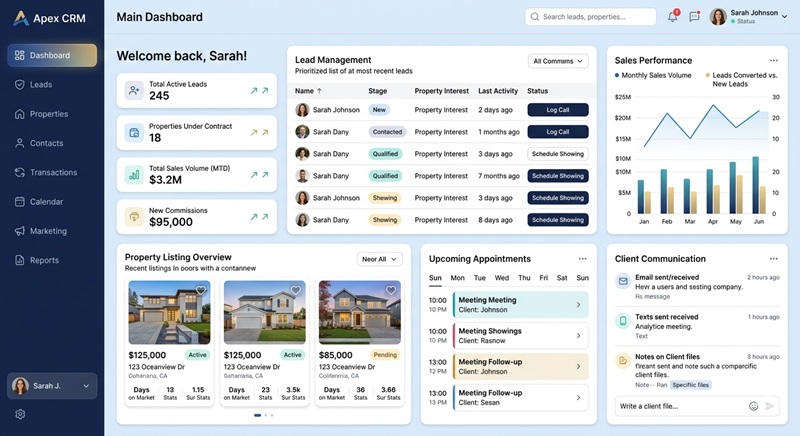
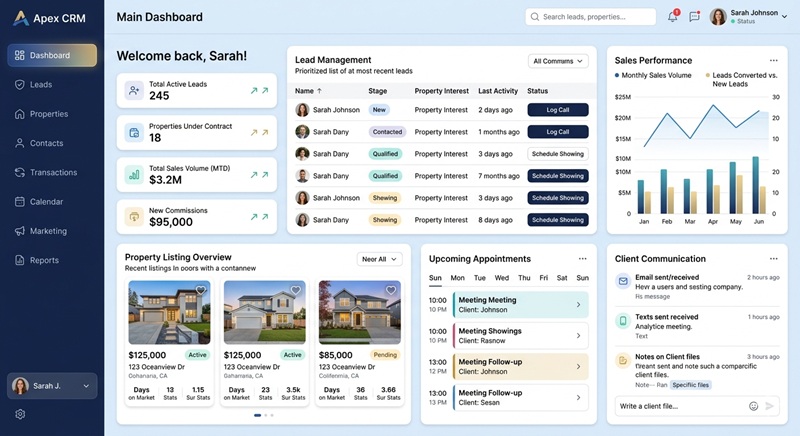
Managing real estate clients manually becomes extremely difficult as a real estate business grows. As the number of property inquiries, buyers, sellers, and follow-ups increases, many agencies struggle to keep operations organized and efficient.
Modern real estate businesses handle multiple daily tasks, including:
- Hundreds of property inquiries
- Buyer and seller follow-ups
- Property listing management
- Appointment scheduling
- Lead tracking
- Client communication management
- Sales pipeline monitoring
- Team coordination across departments
Without a proper real estate client management system, these daily operations quickly become overwhelming.
Many real estate agencies still rely on spreadsheets, manual records, phone calls, and disconnected systems to manage their workflows. While this approach may work for small businesses initially, it creates major operational challenges as the company expands.
Businesses often start facing:
- Missed follow-ups
- Lost leads
- Slow response times
- Poor team coordination
- Disorganized client records
- Duplicate data entries
- Inefficient sales tracking
- Reduced productivity
These problems not only affect internal operations but also negatively impact customer experience, lead conversion rates, and long-term business growth.
In today’s competitive market, real estate companies need more than basic spreadsheets or generic tools. They need a powerful and scalable real estate CRM software solution that can centralize operations, automate repetitive tasks, improve communication, and streamline lead management.
That is exactly why one growing real estate company approached HT Business Group for help.
The company was experiencing rapid business growth but struggling to manage leads, property listings, customer communication, and sales workflows efficiently. Their existing system lacked automation, proper reporting, centralized data management, and workflow visibility.
The business needed a smarter and more organized solution that could:
- Automate lead management
- Improve client communication
- Centralize property and customer data
- Improve sales tracking
- Increase team productivity
- Streamline business operations
- Support future business scalability
To solve these challenges, our team at HT Business Group designed and developed a fully customized CRM for real estate agencies tailored specifically to the client’s operational requirements.
This custom CRM development project focused on creating a centralized and user-friendly platform that could simplify daily workflows, improve operational efficiency, and help the business manage clients and properties more effectively.
In this real estate CRM case study, we will explain:
- How we built a CRM system for real estate
- The major challenges the client faced
- Our CRM planning and development strategy
- The real estate automation software features implemented
- How the CRM improved lead management and communication
- The business results achieved after implementation
This real estate CRM software development case study demonstrates how the right CRM system can transform client management, improve operational efficiency, automate workflows, and create a scalable foundation for long-term business growth.
What This CRM Case Study Covers
This real estate CRM case study explains:
- The client’s major operational challenges
- Why they needed custom CRM development
- Our CRM planning and development process
- Features included in the real estate CRM software
- Automation strategies used
- UI/UX improvements implemented
- Technologies used during development
- Results achieved after CRM implementation
Quick Case Study Snapshot
| Category | Details |
| Industry | Real Estate |
| Solution | Custom CRM Development |
| Goal | Improve Client & Lead Management |
| Main Challenge | Manual Lead Tracking & Poor Workflow Management |
| Services Provided | CRM Development + Automation + UI/UX |
| Key Features | Lead Management, Property Tracking, Automation |
| Results | Faster Response Time & Improved Sales Efficiency |
| Timeline | 4–8 Months |
About the Client
The client was an established and rapidly growing real estate agency offering a wide range of property-related services in a highly competitive market. The company had already built a strong reputation through quality service, experienced agents, and successful property transactions.
However, as the business expanded, managing daily operations became increasingly complex.
The agency specialized in:
- Residential property sales
- Commercial property services
- Property investment consulting
- Real estate lead management
The company worked with a large number of clients every day, including:
- Property buyers
- Property sellers
- Real estate investors
- Commercial clients
- Business property owners
Because of its growing popularity and strong market presence, the agency started receiving large volumes of daily inquiries through:
- Website contact forms
- Phone calls
- Property listing portals
- Social media platforms
- Referral networks
- Email inquiries
While this growth created new business opportunities, it also increased operational pressure on the company’s sales and management teams.
The business was handling:
- Multiple property listings
- Continuous buyer and seller follow-ups
- Client communication management
- Property visit scheduling
- Sales pipeline tracking
- Team coordination across departments
Despite having a successful offline reputation, the company’s internal workflow systems were still heavily dependent on manual processes and outdated management methods.
The agency was using:
- Spreadsheets for lead tracking
- Manual client records
- Separate communication systems
- Basic workflow management tools
These outdated systems created several operational problems as inquiry volumes increased.
The business struggled with:
- Disorganized client information
- Missed lead follow-ups
- Delayed inquiry responses
- Duplicate property records
- Poor sales tracking visibility
- Communication gaps between teams
- Difficulty managing growing property data
As the company continued growing, managing clients, leads, and property listings manually became inefficient, time-consuming, and difficult to scale.
The leadership team realized they needed a more advanced and centralized solution to support future business growth.
Instead of relying on generic tools, the company wanted a custom CRM development solution designed specifically for real estate operations.
Their goal was to implement a powerful real estate CRM software system that could:
- Centralize client and property data
- Automate lead management
- Improve team collaboration
- Streamline communication
- Simplify property tracking
- Increase operational efficiency
- Improve customer experience
- Support long-term scalability
The company wanted more than just a basic CRM platform. They needed a fully customized real estate client management system tailored to their daily workflows and business requirements.
To achieve this, the agency partnered with HT Business Group to build a scalable and intelligent CRM software for property management that could improve productivity, automate repetitive tasks, and strengthen the entire lead management process.
This partnership became the foundation for developing a modern real estate automation software solution that transformed the way the business managed clients, properties, communication, and sales operations.
Target Audience
The custom real estate CRM software was designed to support every major department and user involved in the company’s daily operations. Since the business handled large volumes of property inquiries, client interactions, and sales activities, the CRM system needed to improve efficiency for both internal teams and customers.
Our goal was to build a centralized real estate client management system that simplified workflows, improved communication, automated repetitive tasks, and helped users manage real estate operations more effectively.
The CRM platform was carefully developed to serve multiple user groups within the real estate business ecosystem.
Real Estate Agents
Real estate agents were one of the primary users of the CRM system.
Agents handle multiple responsibilities daily, including:
- Managing buyer and seller inquiries
- Scheduling property visits
- Following up with leads
- Updating property information
- Tracking client communication
- Managing sales opportunities
Before implementing the CRM for real estate agencies, agents struggled with manual lead tracking and disorganized workflows.
The CRM system helped agents:
- Access lead information quickly
- Track inquiry status in real time
- Schedule follow-ups efficiently
- Manage property listings easily
- Communicate with clients faster
- Reduce missed sales opportunities
The centralized dashboard improved productivity and allowed agents to manage more clients efficiently.
Sales Managers
Sales managers needed better visibility into team performance, lead progress, and conversion tracking.
The CRM system provided sales managers with:
- Real-time reporting dashboards
- Lead pipeline tracking
- Agent performance monitoring
- Sales activity reports
- Conversion analytics
- Revenue insights
This improved decision-making and helped management teams monitor business growth more effectively.
The real estate sales CRM also allowed managers to:
- Assign leads automatically
- Track team productivity
- Monitor follow-up completion
- Improve sales workflow management
This created a more organized and data-driven sales environment.
Property Consultants
Property consultants work closely with buyers, sellers, and investors to provide property recommendations and market guidance.
The CRM software for property management helped consultants:
- Access complete client histories
- Understand customer preferences
- Manage property information centrally
- Track investment inquiries
- Improve consultation efficiency
With better access to property and customer data, consultants could provide faster and more personalized service.
This improved customer satisfaction and strengthened client relationships.
Customer Support Teams
Customer support teams play an important role in handling inquiries, scheduling appointments, and assisting clients throughout the sales process.
The CRM system helped support teams:
- Respond to inquiries faster
- Access centralized customer information
- Track communication history
- Manage follow-up schedules
- Coordinate with sales teams more efficiently
The real estate automation software also reduced communication delays and improved response consistency across departments.
This helped create a smoother customer experience.
Property Buyers and Sellers
The CRM system was not only designed for internal teams. It was also developed to improve the experience for property buyers and sellers.
Buyers and sellers often expect:
- Quick responses
- Organized communication
- Property updates
- Appointment reminders
- Smooth transaction processes
The CRM improved customer experience by helping the business:
- Respond faster to inquiries
- Track customer preferences
- Manage communication efficiently
- Schedule appointments properly
- Improve follow-up consistency
This created a more professional and reliable experience for customers.
Real Estate Investors
Real estate investors often require:
- Detailed property information
- Investment tracking
- Quick communication
- Personalized recommendations
- Market insights
The CRM system for real estate brokers and agents helped the company manage investor relationships more effectively through:
- Centralized client records
- Investment inquiry tracking
- Organized property management
- Better communication workflows
This improved relationship management and increased business opportunities with investors.
Building a Centralized Real Estate Client Management System
The main objective of this custom CRM development project was to create a centralized platform that connected every part of the business into one organized system.
Instead of using disconnected tools and manual processes, the CRM centralized:
- Lead management
- Property data
- Customer communication
- Team workflows
- Reporting systems
- Appointment scheduling
- Sales tracking
This centralized structure improved collaboration across departments and helped eliminate operational inefficiencies.
Improving Efficiency for Both Business and Customers
One of the most important goals of the project was improving efficiency for both the internal business team and external customers.
The CRM system helped the business:
- Reduce manual work
- Improve workflow organization
- Increase productivity
- Automate repetitive tasks
- Improve reporting visibility
- Streamline communication
At the same time, it improved customer experience through:
- Faster inquiry responses
- Better communication
- Organized appointment management
- Improved follow-up consistency
- More personalized service
This balanced approach helped create a scalable and efficient real estate lead management system that supported long-term business growth.
Why Understanding the Target Audience Was Important
Understanding the needs of different user groups was critical during the CRM development process.
Every user had different operational requirements:
- Agents needed faster lead management
- Managers needed reporting and analytics
- Consultants needed better property access
- Support teams needed communication tools
- Customers needed better service experiences
By designing the CRM around these real business needs, HT Business Group created a powerful and user-friendly real estate CRM software solution tailored specifically for the client’s operations.
The final platform improved workflow efficiency, communication management, customer engagement, and overall operational performance across the entire business.
Major Challenges the Client Faced
As the real estate business continued growing, managing daily operations became increasingly difficult. The company was handling a large number of property inquiries, client interactions, listings, and follow-ups every day, but its internal systems were still heavily dependent on manual processes and outdated workflows.
Without a centralized real estate CRM software solution, the agency faced several operational challenges that affected productivity, customer experience, and lead conversion performance.
The lack of automation and organized workflows created inefficiencies across multiple departments, making it difficult for the business to scale effectively.
Below are the major challenges the client faced before partnering with HT Business Group for custom CRM development.
Manual Lead Management
One of the biggest problems was manual lead management.
The agency was managing leads using spreadsheets, manual records, and disconnected systems. While this process initially worked when inquiry volume was lower, it became extremely difficult to manage as the business expanded.
The sales team handled hundreds of buyer and seller inquiries every month, but without a proper real estate lead management system, tracking and organizing leads became inefficient.
This created several serious operational issues, including:
- Missed follow-ups
- Duplicate lead entries
- Delayed inquiry responses
- Poor lead organization
- Limited visibility into lead status
- Difficulty tracking customer communication
Sales agents struggled to monitor conversations, appointments, and follow-up activities properly. Important client information was often scattered across emails, spreadsheets, phone notes, and messaging platforms.
Because there was no centralized CRM for real estate agencies, agents had difficulty:
- Tracking inquiry history
- Managing customer preferences
- Monitoring lead stages
- Prioritizing follow-ups
- Assigning leads efficiently
As inquiry volumes increased, lead management became harder to control.
This negatively affected:
- Lead response speed
- Customer experience
- Sales efficiency
- Lead conversion rates
The company realized it needed a centralized real estate CRM software system that could automate lead tracking and improve workflow organization.
Poor Client Communication
Another major challenge was poor client communication.
The business lacked a centralized communication system that allowed teams to manage all customer interactions in one place.
As a result, communication between agents and clients became inconsistent and difficult to track.
This caused:
- Slow inquiry responses
- Missed follow-ups
- Inconsistent communication
- Missed appointments
- Poor customer experience
Agents had difficulty tracking:
- Phone calls
- Emails
- Property discussions
- Appointment schedules
- Client preferences
- Communication history
Without a centralized real estate client management system, important client conversations were often lost or overlooked.
For example:
- One agent may not know another agent already contacted a client
- Follow-up reminders could be missed
- Property discussions were difficult to track
- Customer requests were sometimes delayed
This created frustration for both the business and its customers.
Poor communication also negatively impacted:
- Customer satisfaction
- Brand trust
- Lead nurturing
- Sales conversions
The company needed a better communication workflow that could centralize all customer interactions and improve response consistency.
Disorganized Property Data
Managing property information manually became another major operational challenge.
The agency handled hundreds of residential and commercial property listings, but property data was scattered across multiple files, spreadsheets, and systems.
This created:
- Duplicate property records
- Inconsistent property information
- Slow property search processes
- Difficulty updating listings
- Poor property organization
Sales agents often struggled to quickly access updated property details while communicating with buyers and investors.
Without a proper CRM software for property management, the business had no centralized location for:
- Property listings
- Property images
- Availability status
- Pricing details
- Property categories
- Listing updates
Managing active listings manually reduced operational efficiency and increased the risk of human errors.
This also slowed down customer response times because agents spent too much time searching for property information instead of focusing on sales activities.
The business needed a centralized property management CRM solution that simplified listing management and improved accessibility for sales teams.
Lack of Sales Pipeline Visibility
The company also faced major challenges with sales tracking and reporting visibility.
Because the business lacked a structured real estate sales CRM, managers had limited insight into sales activities and lead progress.
The management team struggled to monitor:
- Lead stages
- Agent performance
- Conversion rates
- Sales progress
- Inquiry status
- Team productivity
Without real-time dashboards and reporting tools, decision-making became difficult.
Managers could not easily identify:
- Which leads required immediate attention
- Which agents were performing best
- Which marketing channels generated quality leads
- Where sales bottlenecks existed
This lack of visibility affected business planning and reduced overall operational efficiency.
The company needed a custom CRM development solution that provided:
- Real-time reporting
- Sales analytics
- Lead tracking dashboards
- Agent performance monitoring
- Conversion insights
A centralized reporting system was essential for improving business management and long-term scalability.
Inefficient Team Collaboration
Another major challenge was inefficient collaboration between departments.
Different teams worked independently using disconnected tools and communication methods.
This created:
- Communication gaps
- Delayed updates
- Task management issues
- Poor workflow coordination
- Duplicate work efforts
- Operational inefficiencies
For example:
- Sales teams lacked access to updated client notes
- Customer support teams could not track property discussions properly
- Managers struggled to monitor workflow progress
- Team coordination became slow and inconsistent
Without a centralized CRM system for real estate brokers and agents, collaboration between departments became difficult.
The company needed a real estate automation software solution that connected:
- Sales teams
- Customer support staff
- Property consultants
- Managers
- Administrative teams
into one organized workflow system.
Improving collaboration was important for:
- Faster communication
- Better task management
- Improved productivity
- More organized operations
- Better customer experience
The business needed a centralized CRM platform that improved operational coordination across the entire organization.
Why These Challenges Needed Immediate Attention
Although the company had a strong market reputation and growing customer demand, these operational inefficiencies were limiting business growth.
The lack of a proper real estate CRM software system was creating:
- Lost sales opportunities
- Reduced productivity
- Poor workflow visibility
- Slow communication
- Inefficient lead management
As the business scaled further, these problems would continue growing and become even harder to manage manually.
The company needed a long-term solution that could:
- Automate workflows
- Centralize operations
- Improve lead management
- Simplify property tracking
- Increase team productivity
- Improve customer experience
- Support future scalability
That is why the agency partnered with HT Business Group to build a powerful and scalable custom CRM development solution tailored specifically for the real estate industry.
Project Goals & Objectives
Before starting the custom CRM development process, our team at HT Business Group worked closely with the client to clearly define the business goals, operational requirements, and long-term growth objectives for the project.
The real estate company was growing rapidly, but its outdated systems and manual workflows were creating operational inefficiencies across multiple departments.
The client needed more than just basic software. They wanted a powerful and scalable real estate CRM software solution that could improve lead management, automate workflows, centralize operations, and support future business expansion.
The primary objective of this real estate CRM case study project was to create a centralized and intelligent real estate client management system that simplified operations and improved overall business performance.
Primary Business Goals
The client had several important business goals they wanted to achieve through the implementation of a custom CRM for real estate agencies.
The CRM system needed to solve existing operational problems while also creating a stronger foundation for long-term scalability and business growth.
Automate Lead Management
One of the biggest goals was automating lead management.
Before implementing the CRM system, the company managed leads manually using spreadsheets and disconnected communication tools. This created delays, missed follow-ups, and inefficient workflows.
The client wanted a real estate lead management system that could:
- Automatically capture leads
- Assign leads to agents
- Track inquiry status
- Schedule follow-ups
- Send automated reminders
- Organize lead communication history
The goal was to reduce manual effort and improve lead response efficiency.
By automating repetitive tasks, the company could improve productivity and reduce the risk of losing potential customers.
Improve Client Communication
Improving communication was another major objective.
The company wanted a centralized communication system that allowed teams to manage all customer interactions in one place.
The CRM software needed to improve:
- Inquiry response times
- Follow-up consistency
- Appointment scheduling
- Communication tracking
- Customer engagement
The client wanted agents and support teams to easily access:
- Call history
- Email conversations
- Property discussions
- Customer preferences
- Follow-up schedules
Better communication management would improve customer experience and increase lead conversion opportunities.
Centralize Customer Data
The business was struggling with scattered customer information stored across spreadsheets, emails, and multiple systems.
One major goal of the project was creating a centralized real estate client management system that stored all customer and property information in one organized platform.
The CRM needed to centralize:
- Lead records
- Customer profiles
- Communication history
- Property inquiries
- Appointment details
- Sales activities
Centralized data management would improve accessibility, reduce duplicate records, and simplify daily operations.
Streamline Property Management
Managing hundreds of property listings manually was slowing down the company’s workflow.
The client needed a CRM software for property management that simplified:
- Property listing updates
- Property categorization
- Property search functionality
- Availability tracking
- Listing organization
The goal was to improve operational efficiency and make property information easier for agents and consultants to access quickly.
This would help improve response speed when communicating with buyers, sellers, and investors.
Improve Sales Tracking
The management team wanted better visibility into the sales pipeline and lead conversion process.
The business needed a real estate sales CRM that could provide:
- Real-time reporting
- Lead stage tracking
- Sales performance monitoring
- Conversion analytics
- Agent productivity insights
Improved sales tracking would help management teams:
- Make better decisions
- Identify sales bottlenecks
- Monitor team performance
- Improve lead conversion rates
The CRM system needed to provide clear and organized business insights.
Increase Operational Efficiency
The company wanted to eliminate inefficient workflows and improve overall operational performance.
Manual processes were slowing down:
- Lead handling
- Client communication
- Property management
- Reporting activities
- Team coordination
The goal was to streamline workflows using real estate automation software that reduced administrative workload and simplified daily operations.
Improving operational efficiency would allow employees to focus more on customer service and sales activities instead of repetitive manual tasks.
Reduce Manual Tasks
Reducing manual work was critical for improving productivity.
The client wanted an automated CRM system for real estate agencies that could automate repetitive activities such as:
- Lead assignments
- Follow-up reminders
- Status updates
- Appointment notifications
- Workflow triggers
Automation would help:
- Save time
- Reduce human errors
- Improve response consistency
- Increase workflow speed
This would create a more scalable and organized business environment.
Improve Team Productivity
Another important goal was improving productivity across all departments.
The company wanted to create a centralized system that improved collaboration between:
- Sales teams
- Customer support staff
- Property consultants
- Management teams
The CRM system needed to improve:
- Workflow coordination
- Communication efficiency
- Task management
- Data accessibility
- Team collaboration
Better productivity would allow the business to handle more inquiries and property transactions efficiently as the company continued growing.
Supporting Long-Term Scalability
One of the most important objectives of the project was scalability.
The client understood that the business would continue expanding, and the CRM system needed to support future growth without operational limitations.
The custom CRM development solution was designed to:
- Handle increasing lead volumes
- Support more users and departments
- Manage larger property databases
- Scale with business growth
- Support future feature integrations
Instead of relying on limited generic software, the company wanted a scalable property management CRM solution tailored specifically to real estate operations.
This long-term approach ensured the CRM could continue supporting the business as operations expanded.
KPIs Measured
To measure the success of the project, our team established several important performance indicators.
These KPIs helped track how effectively the CRM system improved operations, workflow efficiency, and business productivity.
Lead Response Time
One of the most important KPIs was lead response time.
The company wanted to reduce delays in responding to property inquiries and improve customer engagement speed.
Faster response times help:
- Improve customer experience
- Increase lead conversion opportunities
- Reduce lost inquiries
- Improve sales performance
The CRM system was designed to improve response efficiency through automation and centralized communication management.
Inquiry Handling Speed
The business also measured how quickly teams could manage and process customer inquiries.
The CRM platform improved:
- Inquiry organization
- Lead assignment speed
- Communication tracking
- Follow-up scheduling
This helped reduce operational delays and improve overall workflow efficiency.
Follow-Up Completion Rates
Missed follow-ups were one of the company’s biggest problems before CRM implementation.
The CRM system tracked:
- Follow-up schedules
- Reminder completion
- Communication activities
- Customer interactions
This helped improve follow-up consistency and reduce missed sales opportunities.
Team Productivity Improvements
Improving productivity across departments was another key success metric.
The CRM system measured improvements in:
- Task management
- Workflow coordination
- Communication efficiency
- Operational speed
By reducing manual work and centralizing operations, employees could complete tasks more efficiently.
Sales Pipeline Visibility
The company also measured improvements in sales tracking and reporting visibility.
The CRM provided real-time access to:
- Lead stages
- Conversion tracking
- Agent performance
- Sales reports
- Revenue insights
This improved decision-making and helped management teams monitor business performance more effectively.
CRM Adoption Rate
A CRM system is only successful if employees actively use it.
The company tracked:
- Employee adoption rates
- User engagement
- Workflow usage
- Dashboard activity
Because the platform was user-friendly and tailored specifically for the real estate industry, adoption rates improved significantly.
Workflow Automation Efficiency
Another important KPI was workflow automation performance.
The business measured how effectively the CRM reduced:
- Manual tasks
- Administrative workload
- Human errors
- Communication delays
Automation improvements helped increase operational efficiency and allowed teams to focus more on customer relationships and sales growth.
Creating a Long-Term Business Growth System
The overall goal of this real estate CRM software development project was not only to improve current operations but also to create a long-term digital growth system for the business.
By implementing:
- Custom CRM development
- Workflow automation
- Centralized communication
- Real estate lead management optimization
- Real-time reporting
- Property management tools
HT Business Group helped the company build a scalable and future-ready CRM platform designed to support long-term operational success and business expansion.
Our CRM Development Strategy
Building a successful real estate CRM software requires much more than writing code. A CRM system must be designed around real business workflows, user behavior, operational challenges, and long-term scalability goals.
At HT Business Group, our approach focused on creating a fully customized and scalable real estate client management system tailored specifically to the client’s business operations.
Instead of using a generic CRM platform, we developed a custom CRM development solution designed to improve:
- Lead management
- Team collaboration
- Property tracking
- Customer communication
- Workflow automation
- Sales performance visibility
Our goal was to create a centralized and intelligent CRM for real estate agencies that simplified operations, improved efficiency, and supported long-term business growth.
Business Requirement Analysis
Before development started, our team conducted detailed business analysis sessions to fully understand how the company operated on a daily basis.
This step was critical because every real estate business has unique workflows, challenges, and operational requirements.
We carefully analyzed:
- Daily workflows
- Operational bottlenecks
- Sales processes
- Lead management challenges
- User requirements
- Communication workflows
- Automation opportunities
The purpose of this analysis was to identify inefficiencies and create a CRM system for real estate brokers and agents that solved real business problems instead of adding unnecessary complexity.
Working Closely with Internal Teams
To ensure the CRM platform matched the company’s actual workflow requirements, we worked closely with multiple departments and team members.
This included:
- Sales agents
- Team managers
- Customer support staff
- Property consultants
- Business stakeholders
By collaborating directly with the people using the system daily, we gained valuable insights into:
- Existing workflow issues
- Communication gaps
- Lead tracking problems
- Reporting limitations
- Property management inefficiencies
This helped us design a highly customized real estate automation software solution tailored specifically to the company’s operations.
Workflow Mapping
One of the most important stages of the project was workflow mapping.
Before building the CRM architecture, we mapped the complete business workflow from the initial inquiry to final customer conversion.
We structured workflows for:
- Lead generation
- Property inquiries
- Follow-up management
- Appointment scheduling
- Client onboarding
- Sales pipeline management
- Customer communication tracking
This process allowed us to identify areas where automation could improve efficiency and reduce manual workload.
Workflow mapping also helped create a more organized and scalable CRM structure that improved coordination across departments.
By understanding how information moved through the business, we developed a more efficient and intelligent real estate lead management system.
CRM System Planning & Architecture
After completing the business analysis phase, our development team began planning the overall CRM architecture.
The CRM system was designed to be:
- Scalable
- Secure
- User-friendly
- Flexible
- Automation-focused
- Performance-optimized
The goal was to build a long-term property management CRM solution that could support future business growth without requiring major system changes later.
Creating a Scalable CRM Structure
Scalability was one of the most important priorities during development.
As the company continued growing, the CRM needed to handle:
- Increasing lead volumes
- More property listings
- Larger customer databases
- Additional users and departments
- Higher communication activity
To support this growth, we created a modular CRM structure that allowed the business to expand the system over time.
This ensured the platform remained fast, organized, and efficient even as operations scaled.
CRM Modules Planned
To simplify business operations, we divided the CRM into specialized modules designed specifically for the real estate industry.
The CRM included modules for:
- Lead management
- Property management
- Client communication
- Reporting dashboards
- Team collaboration
- Appointment management
- Workflow automation
Each module was carefully customized to match the company’s operational processes.
This modular approach improved:
- Workflow organization
- User accessibility
- System flexibility
- Department coordination
It also made the real estate CRM software easier to manage and upgrade in the future.
Database Architecture
A strong database structure is critical for every CRM platform.
The client’s previous system stored information across spreadsheets and disconnected platforms, which created confusion and reduced operational efficiency.
To solve this problem, we developed a secure and centralized database architecture for:
- Client records
- Property details
- Communication history
- Lead tracking
- Agent activities
- Appointment schedules
- Sales reports
This centralized structure improved:
- Data accessibility
- Workflow speed
- Information accuracy
- Team coordination
- Reporting visibility
The organized database also reduced duplicate records and improved operational reliability.
UI/UX Design Strategy
User experience played a major role in the success of this custom CRM development project.
Many businesses fail to fully adopt CRM systems because they are too complicated or difficult to use.
To improve adoption and productivity, we designed a clean, modern, and easy-to-use interface focused on simplicity and efficiency.
The UI/UX strategy focused on:
- Fast navigation
- Simple workflows
- Mobile responsiveness
- Easy property search
- Quick access to customer data
- Minimal operational complexity
The CRM dashboard was designed to help users complete tasks quickly without unnecessary steps.
This improved usability across all departments.
Creating a User-Friendly CRM Experience
The CRM interface was designed specifically for daily real estate operations.
We simplified workflows so users could:
- Access leads faster
- Track property inquiries easily
- Schedule follow-ups quickly
- Manage communication efficiently
- Monitor sales activities in real time
A user-friendly interface improved:
- Employee productivity
- Workflow efficiency
- CRM adoption rates
- Operational consistency
This helped employees transition smoothly from manual systems to the new digital platform.
Role-Based Dashboard Design
Different departments required different levels of access and functionality.
To improve usability and security, we created customized role-based dashboards for:
- Admin users
- Sales agents
- Team managers
- Customer support staff
- Property consultants
Each user role received access only to the tools, reports, and information relevant to their responsibilities.
For example:
- Managers could access reporting dashboards
- Sales agents could manage leads and appointments
- Support teams could track communication history
This improved workflow organization and reduced system complexity.
Real Estate CRM Features Developed
The CRM included several advanced features designed specifically to improve real estate operations and customer management.
Every feature was developed to solve real business challenges and improve workflow efficiency.
Lead Management System
One of the most important features was the advanced real estate lead management system.
The CRM included:
- Lead capture forms
- Automated lead assignment
- Lead stage tracking
- Follow-up reminders
- Lead source tracking
- Inquiry history management
This helped the business:
- Organize inquiries more efficiently
- Improve response times
- Reduce missed follow-ups
- Track customer journeys more effectively
The system improved both lead visibility and sales coordination.
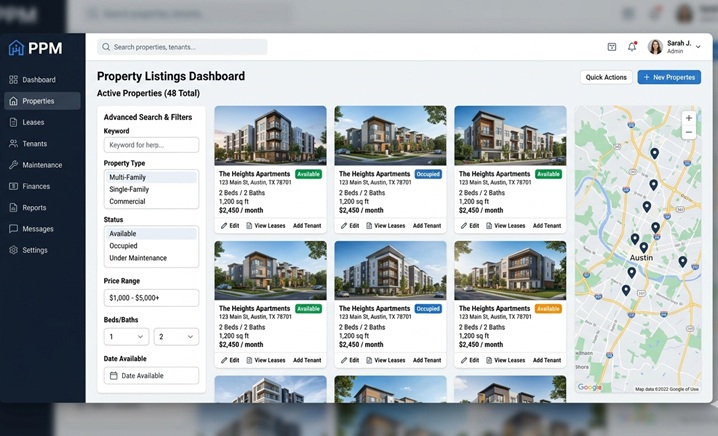
Property Management Module
We developed a centralized property management module to simplify listing management.
The system included:
- Property listing management
- Property image uploads
- Availability tracking
- Search and filter functionality
- Property categorization
- Listing update management
This made property data easier to manage and improved accessibility for agents and consultants.
The CRM software for property management helped reduce manual work and improved listing organization.
Client Communication Tools
To improve customer communication efficiency, we integrated several communication features directly into the CRM.
These included:
- Email notifications
- SMS reminders
- Follow-up alerts
- Chat history tracking
- Automated communication workflows
This centralized communication structure improved:
- Response consistency
- Follow-up management
- Customer engagement
- Team coordination
Agents could easily track all client interactions from one platform.
Task & Appointment Management
Managing appointments and tasks manually often causes missed meetings and operational delays.
To solve this issue, we developed integrated scheduling and task management features.
The CRM included:
- Calendar scheduling
- Meeting reminders
- Property visit management
- Agent task tracking
- Workflow notifications
This improved coordination across teams and helped employees stay organized throughout the sales process.
Reporting & Analytics Dashboard
The management team needed better visibility into business performance.
We developed advanced reporting dashboards for:
- Sales performance monitoring
- Lead conversion tracking
- Agent productivity analysis
- Revenue insights
- Inquiry trends
These dashboards provided real-time visibility into business operations and helped management make data-driven decisions.
The reporting system improved:
- Performance monitoring
- Sales tracking
- Business forecasting
- Operational planning
CRM Automation Features
Automation was one of the most important parts of this real estate CRM software project.
The client wanted an automated CRM system for real estate agencies that reduced repetitive tasks and improved workflow speed.
Automation helped eliminate manual bottlenecks and improved operational consistency across departments.
Automated Lead Assignment
The CRM automatically assigned leads to agents based on:
- Geographic location
- Property type
- Agent availability
- Inquiry category
This significantly reduced response delays and improved lead distribution efficiency.
Automated lead assignment also helped ensure inquiries were routed to the most appropriate team member quickly.
Follow-Up Automation
Missed follow-ups were one of the company’s biggest operational problems before CRM implementation.
To solve this issue, we automated:
- Follow-up reminders
- Email sequences
- Inquiry notifications
- Missed lead alerts
This helped improve customer communication consistency and reduced lost sales opportunities.
Automation also improved lead nurturing throughout the sales pipeline.
Workflow Automation
To improve productivity further, we automated several operational workflows.
These included:
- Lead stage updates
- Task creation
- Notification triggers
- Appointment reminders
- Status updates
This reduced repetitive manual work and allowed employees to focus more on customer service and sales activities.
Workflow automation improved:
- Operational efficiency
- Team productivity
- Task management
- Communication speed
- Workflow consistency
Building a Future-Ready Real Estate CRM System
The overall CRM development strategy focused on building a future-ready platform that supported long-term scalability, automation, and operational efficiency.
By combining:
- Custom CRM development
- Workflow automation
- Real estate lead management optimization
- User-friendly UI/UX
- Centralized communication
- Real-time reporting
HT Business Group successfully created a scalable and intelligent real estate CRM software solution tailored specifically to the client’s business operations and growth goals.
Mobile CRM Optimization
Because real estate agents frequently work in the field, mobile optimization was essential.
The CRM was fully optimized for:
- Mobile dashboards
- Mobile lead tracking
- Instant communication
- Quick property updates
- Mobile notifications
This improved flexibility and productivity for sales teams.
Integration Features
We integrated the CRM with:
- Email systems
- SMS gateways
- Google Calendar
- Property listing platforms
- Third-party APIs
This improved automation and centralized workflow management.
Testing & Quality Assurance
Before launch, the CRM underwent extensive testing for:
- Performance
- Security
- Mobile responsiveness
- Workflow automation
- Database stability
- User permissions
Our QA process ensured smooth CRM performance after deployment.
CRM Deployment & Staff Training
After successful testing, we handled:
- Server deployment
- Cloud configuration
- Data migration
- CRM setup
- Security implementation
We also provided:
- Staff training
- User onboarding
- Workflow guidance
- Technical support documentation
This ensured smooth adoption across the organization.
Results Achieved
After successfully implementing the custom real estate CRM software, the client experienced major improvements across daily operations, team productivity, lead management, communication efficiency, and overall business performance.
The new centralized real estate client management system transformed the way the company handled leads, property data, customer communication, and internal workflows.
By combining:
- Custom CRM development
- Workflow automation
- Centralized communication tools
- Real-time reporting
- Real estate-specific features
HT Business Group helped the business create a scalable and efficient digital management system designed for long-term growth.
Below are the key results achieved after CRM implementation.
Improved Lead Management Efficiency
One of the biggest improvements came from the new real estate lead management system.
Before implementing the CRM, the business struggled with manual lead tracking, missed follow-ups, and disorganized inquiry management.
The CRM significantly improved:
- Lead tracking
- Follow-up management
- Inquiry organization
- Sales workflow efficiency
- Lead response coordination
- Customer interaction tracking
All inquiries were now stored inside a centralized platform, making it easier for agents and managers to monitor customer interactions throughout the sales journey.
The CRM system allowed teams to:
- Track lead stages in real time
- Monitor inquiry progress
- Schedule follow-ups automatically
- Organize customer information efficiently
- Improve lead prioritization
This created a more structured and organized sales process.
The business also gained better visibility into every stage of the customer journey, helping teams manage leads more effectively and reduce missed opportunities.
As a result, the company improved:
- Lead handling speed
- Follow-up consistency
- Customer engagement
- Sales coordination
- Lead conversion efficiency
The real estate CRM software created a more reliable and scalable lead management workflow.
Faster Client Communication
Customer communication improved significantly after implementing the CRM system.
Previously, communication was scattered across emails, phone calls, spreadsheets, and disconnected systems. This created delays, inconsistent follow-ups, and poor visibility into customer conversations.
The CRM solved these problems through:
- Automated reminders
- Faster communication tools
- Centralized inquiry management
- Organized communication history
- Automated notifications
- Real-time customer updates
Agents could now access all customer interactions from one centralized platform.
This helped reduce:
- Communication delays
- Missed follow-ups
- Appointment scheduling issues
- Customer response inconsistencies
The real estate automation software improved communication efficiency across all departments.
Customers experienced:
- Faster responses
- Better follow-up communication
- More organized interactions
- Improved appointment coordination
This improved both customer satisfaction and engagement.
The centralized communication system also helped the business maintain a more professional and reliable customer experience.
Increased Team Productivity
The centralized CRM system improved productivity across the entire organization.
Before implementation, employees spent large amounts of time managing manual tasks, searching for information, updating spreadsheets, and coordinating between departments.
The new CRM platform streamlined daily operations and improved workflow organization.
The system improved:
- Team collaboration
- Task management
- Workflow coordination
- Operational efficiency
- Data accessibility
- Internal communication
Employees could now access:
- Customer records
- Property details
- Communication history
- Follow-up schedules
- Sales reports
from one centralized dashboard.
This reduced confusion and improved operational speed.
Agents could now manage:
- Leads
- Properties
- Appointments
- Follow-ups
- Customer communication
much faster and more efficiently.
The user-friendly CRM design also improved employee adoption rates and reduced the learning curve for teams transitioning from manual systems.
As a result, the company improved:
- Workflow speed
- Task completion efficiency
- Department coordination
- Daily operational productivity
The CRM software became an important productivity tool for the entire business.
Better Sales Pipeline Visibility
Before implementing the CRM system, the management team had limited visibility into sales activities and lead progress.
Sales tracking was handled manually, making it difficult to monitor performance and make informed decisions.
The CRM solved this issue by providing real-time reporting dashboards and centralized sales tracking tools.
Managers gained instant access to:
- Sales performance reports
- Lead conversion stages
- Agent productivity insights
- Revenue trends
- Inquiry tracking dashboards
- Workflow activity reports
This improved:
- Sales visibility
- Business reporting
- Team performance monitoring
- Strategic decision-making
The real estate sales CRM allowed managers to identify:
- High-performing agents
- Sales bottlenecks
- Delayed follow-ups
- Conversion opportunities
- Operational inefficiencies
Real-time reporting helped management teams make faster and smarter business decisions.
This data-driven approach improved overall business planning and operational control.
Automation Reduced Manual Work
Workflow automation was one of the most valuable improvements delivered by the CRM platform.
Before CRM implementation, employees handled many repetitive tasks manually, including:
- Lead assignments
- Follow-up reminders
- Appointment tracking
- Status updates
- Communication scheduling
These repetitive activities consumed valuable time and increased the risk of human errors.
The automated CRM system for real estate agencies significantly reduced manual workload through:
- Workflow automation
- Automated follow-up reminders
- Lead stage updates
- Automated notifications
- Appointment reminders
- Inquiry alerts
This reduced:
- Repetitive tasks
- Manual follow-ups
- Human errors
- Administrative workload
- Communication delays
By automating routine workflows, employees could focus more on:
- Sales activities
- Customer relationships
- Lead nurturing
- Client communication
- Business growth initiatives
Automation also improved operational consistency and helped the business scale more efficiently.
Before vs After CRM Implementation
The difference before and after CRM implementation was significant across multiple operational areas.
| Metric | Before CRM | After CRM |
| Lead Response Time | Slow | Significantly Faster |
| Follow-Up Management | Manual | Automated |
| Team Collaboration | Disorganized | Centralized |
| Sales Reporting | Manual | Real-Time Dashboard |
| Lead Tracking | Limited | Fully Structured |
| Communication Workflow | Scattered | Centralized |
| Workflow Efficiency | Time-Consuming | Streamlined |
| Data Accessibility | Limited | Instant Access |
These improvements helped the company operate more efficiently and support future business growth more effectively.
Key CRM Development Strategies That Delivered Results
Several important development strategies played a major role in the project’s success.
The most impactful strategies included:
- Workflow automation
- Centralized lead management
- Mobile CRM optimization
- Real-time reporting dashboards
- User-friendly CRM design
- Real estate-specific customization
- Role-based dashboard structure
- Centralized communication workflows
Instead of using generic software, the CRM was tailored specifically for the company’s operational requirements.
These improvements helped create:
- A scalable real estate client management system
- Better operational organization
- Faster workflow execution
- Improved productivity
- More efficient customer management
The combination of automation, customization, and centralized workflows created long-term operational value for the business.
Why Custom CRM Was Better Than Generic CRM Software
The client originally considered using generic CRM platforms, but these systems lacked the flexibility required for real estate operations.
Generic CRM tools often force businesses to adapt their workflows around software limitations.
Instead, the company needed a custom CRM development solution designed specifically for:
- Real estate lead management
- Property tracking
- Client communication
- Appointment scheduling
- Sales workflow management
A custom real estate CRM software solution provided several major advantages, including:
- Industry-specific workflows
- Flexible feature customization
- Better scalability
- Easier integrations
- Improved operational efficiency
- More organized workflows
- Greater long-term flexibility
The system was fully tailored to the company’s operational structure and future growth goals.
This made the platform significantly more effective than generic CRM systems.
The business gained a powerful property management CRM solution designed specifically for its needs instead of relying on limited one-size-fits-all software.
Expert Insights from HT Business Group
This project provided valuable insights into how modern CRM systems can transform business operations for real estate companies.
The success of the project demonstrated the importance of:
- Workflow automation
- User-friendly design
- Centralized operations
- Real-time reporting
- Industry-specific customization
Important Development Lessons
Several important lessons emerged during the CRM development process.
Automation Improves Operational Efficiency
One of the biggest lessons was that automation significantly improves operational efficiency.
Automating repetitive workflows helped:
- Reduce manual workload
- Improve response times
- Increase productivity
- Reduce human errors
- Improve workflow consistency
For growing businesses, automation becomes essential for scalability and long-term operational success.
User-Friendly Design Increases CRM Adoption
Many CRM systems fail because employees find them too complicated.
This project demonstrated that:
- Clean UI/UX design
- Simple navigation
- Easy workflows
- Fast accessibility
greatly improve CRM adoption rates and employee productivity.
A user-friendly CRM system encourages teams to use the platform consistently.
Mobile CRM Improves Field Productivity
Real estate agents often work outside the office while handling client meetings and property visits.
Mobile CRM optimization allowed agents to:
- Access customer information quickly
- Manage appointments on the go
- Respond to inquiries faster
- Update property details instantly
This improved flexibility and operational efficiency for field teams.
Real-Time Reporting Supports Smarter Decisions
The reporting dashboard became one of the most valuable management tools.
Real-time visibility into:
- Sales performance
- Lead conversions
- Team productivity
- Revenue trends
helped management teams make faster and more informed business decisions.
Data-driven reporting improved both operational planning and sales management.
Custom CRM Systems Provide Better Business Flexibility
This project reinforced the value of custom CRM development over generic software solutions.
Custom systems provide:
- Greater flexibility
- Better scalability
- Workflow customization
- Industry-specific functionality
- Long-term operational control
This makes them ideal for businesses with specialized operational requirements.
Industry Expertise
HT Business Group helps businesses build scalable digital systems designed to improve efficiency, productivity, and long-term growth.
Our expertise includes:
- CRM software development
- Website development
- AI-driven automation systems
- Real estate software solutions
- Lead management systems
- Workflow automation strategies
- Business process optimization
- Custom enterprise software development
We focus on building intelligent digital platforms that help businesses simplify operations, improve customer management, and scale more efficiently.
Client Testimonial
Client Experience with CRM Implementation
The client was highly satisfied with the CRM implementation process and the operational improvements achieved after deployment.
The business appreciated:
- The user-friendly CRM interface
- Improved workflow organization
- Faster lead management
- Better communication systems
- Real-time reporting visibility
- Automation capabilities
Operational Improvements Achieved
After implementing the CRM system, the company experienced:
- Faster inquiry handling
- Better lead organization
- Improved team coordination
- Increased productivity
- More efficient property management
- Improved customer communication
These operational improvements helped the company scale more efficiently.
Workflow Efficiency Results
The CRM platform successfully streamlined:
- Lead workflows
- Communication management
- Sales tracking
- Appointment scheduling
- Reporting processes
Automation reduced administrative workload and improved daily operational speed across departments.
Satisfaction and Business Impact Statement
The client described the CRM system as a major operational transformation for the business.
The platform improved:
- Business efficiency
- Team productivity
- Customer experience
- Sales coordination
- Workflow organization
The company now operates with a centralized and scalable real estate CRM software solution designed to support long-term business growth and operational success.
FAQ
What is a Real Estate CRM System?
A real estate CRM system is software designed to help real estate businesses manage leads, clients, property listings, appointments, and communication from one centralized platform. It helps agents organize customer information, track sales activities, automate follow-ups, and improve workflow efficiency. A real estate CRM also improves customer experience by enabling faster responses and better lead management. Modern CRM software helps real estate agencies scale operations and increase productivity.
Why Do Real Estate Agencies Need CRM Software?
Real estate agencies need CRM software to manage large volumes of leads, property inquiries, and customer communication more efficiently. Without a CRM system, businesses often struggle with missed follow-ups, slow response times, and disorganized client data. CRM software automates workflows, improves team collaboration, and helps agents track every stage of the sales process. It also improves lead conversion rates and supports long-term business growth.
How Does a CRM Help Real Estate Agents?
A CRM helps real estate agents organize leads, manage customer communication, schedule follow-ups, and track property inquiries in one place. It reduces manual work by automating repetitive tasks such as reminders and lead assignments. Agents can quickly access customer history, appointment schedules, and property details, improving response speed and productivity. A real estate CRM also helps agents close deals faster through better workflow management.
What Features Should a Real Estate CRM Include?
A real estate CRM should include lead management, property listing management, follow-up automation, appointment scheduling, communication tracking, reporting dashboards, and workflow automation tools. Mobile access, role-based dashboards, and real-time analytics are also important features for improving productivity. A strong CRM system should centralize customer data and simplify sales operations. Custom real estate CRM software can also include AI automation and advanced reporting capabilities.
How Does CRM Improve Real Estate Lead Management?
CRM software improves real estate lead management by organizing inquiries, tracking customer interactions, and automating follow-up workflows. It helps businesses capture leads from multiple channels and assign them to agents automatically. CRM systems also provide visibility into lead stages, helping teams prioritize high-intent prospects more effectively. This improves response speed, lead nurturing, and overall conversion rates.
Can a CRM Automate Follow-Ups?
Yes, a CRM can automate follow-ups using reminders, email sequences, SMS alerts, and workflow triggers. Automated follow-ups help businesses respond faster and reduce missed sales opportunities. Real estate CRM software ensures every lead receives timely communication throughout the customer journey. This improves customer engagement, communication consistency, and lead conversion performance.
Can a CRM Reduce Manual Workload?
Yes, CRM software significantly reduces manual workload by automating repetitive tasks such as lead assignments, reminders, status updates, and reporting. Employees spend less time managing spreadsheets and administrative work, allowing them to focus more on sales and customer relationships. Workflow automation also reduces human errors and improves operational efficiency. This helps businesses scale operations more effectively.
Can CRM Software Manage Property Listings?
Yes, CRM software can centrally manage property listings, property details, images, pricing, availability status, and listing updates. A property management CRM solution helps agents quickly search and organize properties while improving listing accessibility. This reduces manual errors and simplifies property management workflows. Centralized property data also improves communication with buyers, sellers, and investors.
How Can a Custom CRM Help Grow a Real Estate Business?
A custom CRM helps grow a real estate business by improving lead management, automating workflows, increasing team productivity, and enhancing customer communication. Unlike generic CRM platforms, a custom CRM is tailored specifically to real estate operations and business goals. It provides better scalability, workflow flexibility, and operational efficiency. This helps businesses generate more leads, improve conversions, and support long-term growth.
Why Choose HT Business Group for CRM Development?
HT Business Group specializes in custom CRM development, real estate software solutions, workflow automation, AI-driven systems, and business process optimization. Our team builds scalable CRM platforms tailored specifically to business operations and industry requirements. We focus on improving productivity, communication, lead management, and operational efficiency through intelligent software development. Our goal is to help businesses create future-ready digital systems that support long-term growth.
Final Conclusion
This real estate CRM case study demonstrates how the right technology solution can completely transform business operations, improve workflow efficiency, and support long-term growth.
Before implementing the CRM system, the company struggled with:
- Manual lead management
- Disorganized customer data
- Slow communication workflows
- Limited sales visibility
- Operational inefficiencies
As the business continued growing, these challenges started affecting productivity, customer experience, and overall sales performance.
To solve these issues, HT Business Group developed a fully customized real estate CRM software solution tailored specifically to the company’s operational requirements.
The goal was not simply to create another CRM platform. The objective was to build a centralized and scalable real estate client management system that streamlined workflows, improved collaboration, automated repetitive tasks, and simplified customer management.
By combining:
- CRM software development
- Workflow automation
- Mobile optimization
- Real-time analytics
- User-focused UI/UX
- Centralized lead management
- Real estate-specific customization
HT Business Group successfully transformed the company’s client management process into a scalable digital growth system.
The new CRM platform helped the business:
- Improve lead tracking
- Automate follow-ups
- Centralize communication
- Organize property management
- Improve sales reporting
- Increase team productivity
- Reduce manual workload
- Improve customer engagement
One of the biggest advantages of this custom CRM development approach was flexibility.
Unlike generic CRM platforms, the system was built specifically for:
- Real estate agencies
- Property consultants
- Sales teams
- Customer support workflows
- Real estate lead management operations
This made the CRM software more efficient, scalable, and easier to adapt as the business continued expanding.
The project also demonstrated how automation and centralized workflows can significantly improve operational performance in the real estate industry.
Through:
- Automated lead assignment
- Follow-up reminders
- Centralized dashboards
- Real-time reporting
- Mobile CRM accessibility
the business gained better control over its daily operations and improved overall efficiency.
Today, the company operates with a modern and intelligent property management CRM solution that supports faster communication, stronger customer relationships, and more organized sales management.
This successful implementation highlights how a custom real estate CRM system can help businesses:
- Improve operational efficiency
- Increase productivity
- Strengthen customer experience
- Streamline lead management
- Support long-term scalability
For growing real estate companies, investing in the right CRM software is no longer optional. It has become an essential part of building a scalable and competitive digital business infrastructure.
Ready to Build a Custom CRM for Your Real Estate Business?
If your business is struggling with:
- Manual lead management
- Disorganized customer records
- Slow follow-ups
- Poor workflow coordination
- Limited sales visibility
it may be time to implement a custom CRM solution built specifically for your operations.
Partner with HT Business Group to develop a powerful real estate CRM software system that helps you:
- Automate workflows
- Improve lead management
- Centralize operations
- Increase productivity
- Improve customer communication
- Scale your business efficiently
Whether you need:
- A CRM for real estate agencies
- A property management CRM solution
- A lead management platform
- Workflow automation software
- AI-driven business automation systems
our team can build a scalable solution tailored to your business goals.
- Get Free CRM Consultation
- Build Your Custom CRM