
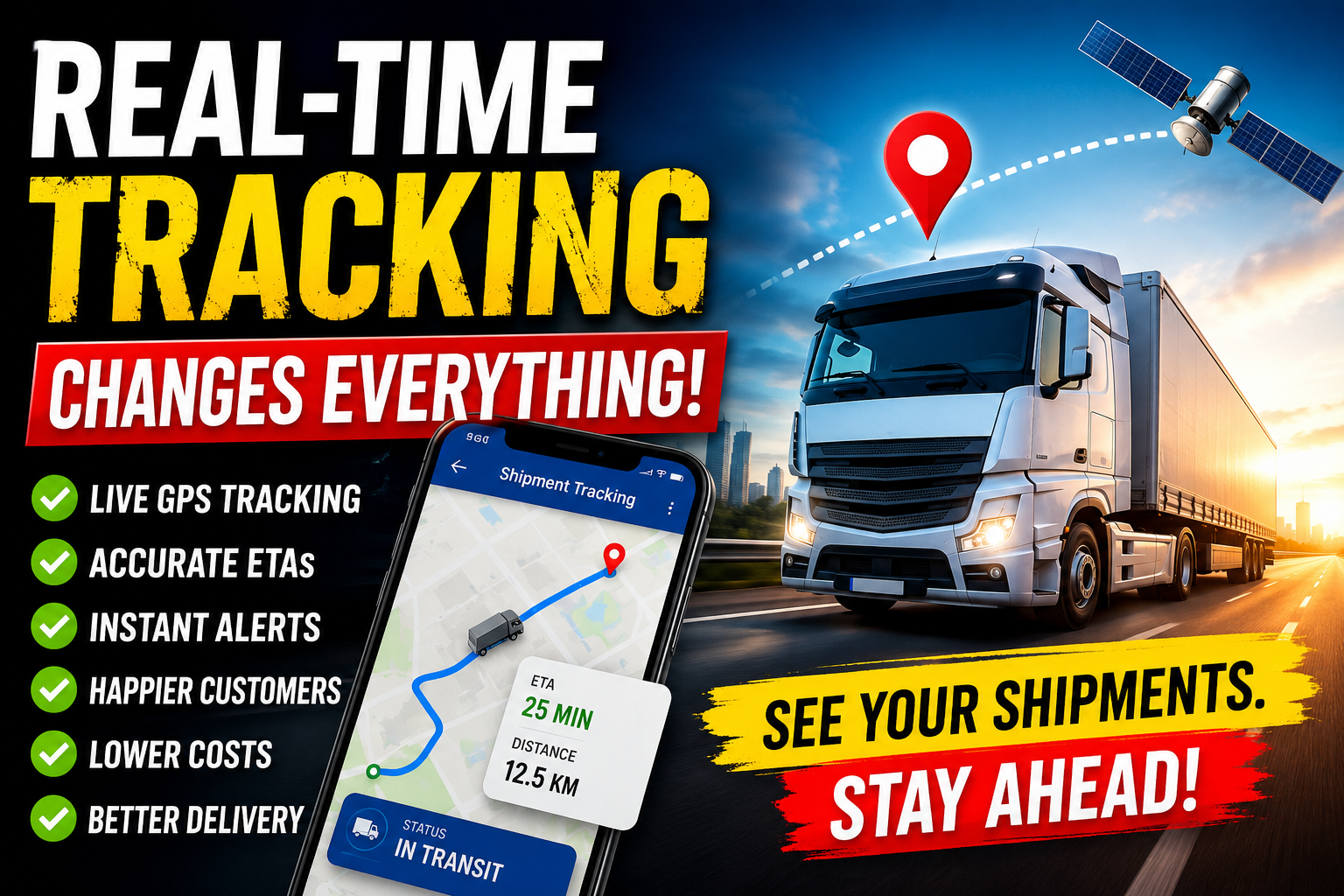
In today’s digital logistics industry, customers expect complete transparency from the moment an order is dispatched until it reaches its destination. They no longer accept vague delivery windows or repeated calls to customer support asking, “Where is my shipment?”
For logistics companies, transportation providers, freight brokers, courier services, and supply chain operators, a modern website is no longer just a digital brochure. It has become the central hub where customers, drivers, dispatchers, warehouse teams, and business partners interact in real time.
A real-time tracking website combines GPS technology, cloud computing, IoT sensors, AI-powered analytics, automated notifications, customer dashboards, route optimization, and shipment management into one powerful platform.
Companies that still rely on manual updates, spreadsheets, emails, or phone calls often struggle with:
- Poor customer satisfaction
- Delayed deliveries
- High operational costs
- Inefficient dispatching
- Increased support requests
- Limited shipment visibility
- Lost customer trust
This guide explains why real-time logistics websites have become a competitive necessity rather than a luxury.
What Is a Real-Time Tracking Website?
A real-time tracking website is a smart online platform that lets logistics companies, shipping providers, and customers see the exact location and status of shipments at any moment. Instead of waiting for phone calls or manual updates, users can track deliveries live through GPS tracking, interactive maps, and automatic notifications.
Think of it as a digital control center for your logistics business. It connects customers, dispatchers, drivers, warehouse teams, and managers in one place, giving everyone access to the same up-to-date information. This improves communication, reduces delays, and helps businesses deliver a better customer experience.
Unlike traditional logistics websites that only provide company details, contact information, or service pages, a real-time tracking website actively supports daily transportation operations. It collects live data from GPS devices, fleet management systems, warehouse software, and cloud-based logistics platforms to provide accurate shipment updates 24/7.
For example, if a delivery truck is delayed because of traffic or bad weather, the system can automatically update the estimated delivery time (ETA) and notify the customer without anyone making a phone call. This level of visibility builds trust and helps businesses solve problems before they become bigger issues.
Real-time tracking websites are now widely used by courier services, freight companies, trucking businesses, eCommerce delivery providers, third-party logistics (3PL) companies, manufacturers, and supply chain organizations. As customer expectations continue to grow, live shipment tracking has become an essential feature rather than an optional service.
According to the U.S. Department of Transportation, digital transportation technologies improve supply chain visibility and support more efficient freight movement.
The Council of Supply Chain Management Professionals (CSCMP) also highlights that real-time visibility is one of the most important technologies helping businesses improve supply chain performance and customer satisfaction.
Key Features of a Real-Time Tracking Website
A modern logistics tracking platform includes a wide range of features designed to improve efficiency, visibility, and customer satisfaction.
Live Vehicle Tracking
Monitor the real-time location of delivery trucks, vans, and other fleet vehicles on an interactive map. Dispatchers can quickly identify where each vehicle is and respond faster to unexpected delays.
GPS Location Updates
Receive continuous GPS updates that show the exact position of every shipment. Accurate location data helps businesses improve delivery accuracy and reduce customer uncertainty.
Shipment Status Monitoring
Track every stage of the delivery journey, from order confirmation and warehouse dispatch to in-transit updates and final delivery. Customers always know the current status of their shipment.
Driver Management
Assign drivers, monitor routes, track performance, and communicate with delivery teams from one centralized dashboard. This helps improve productivity and operational control.
Digital Proof of Delivery (POD)
Drivers can upload customer signatures, delivery photos, timestamps, and GPS coordinates as proof that the shipment was successfully delivered. This helps reduce delivery disputes and improves accountability.
Route Optimization
Advanced route planning uses live traffic data, road conditions, and delivery schedules to recommend the fastest and most efficient routes. Better route planning reduces fuel costs and improves on-time delivery performance.
ETA Predictions
The system automatically calculates accurate Estimated Time of Arrival (ETA) based on traffic, weather, and vehicle location. Customers receive realistic delivery times instead of rough estimates.
Customer Self-Service Portal
Customers can log in to view shipment history, download invoices, track current deliveries, access proof of delivery documents, and manage orders without contacting customer support.
Automated Notifications
Keep customers informed with automatic email, SMS, or push notifications whenever a shipment is dispatched, delayed, out for delivery, or successfully delivered.
Warehouse Integration
Connect the tracking website with warehouse management systems (WMS) to synchronize inventory, shipment preparation, dispatch schedules, and order fulfillment in real time.
Analytics Dashboards
Business leaders can monitor important performance metrics such as delivery success rates, fleet utilization, average delivery time, driver productivity, fuel efficiency, and customer satisfaction. These insights support smarter business decisions.
Mobile-Friendly Design
A responsive, mobile-first website allows customers, drivers, and logistics managers to access shipment information from any smartphone, tablet, or desktop device. Since many users check delivery updates on mobile devices, mobile responsiveness is essential for a seamless customer experience.
Why Real-Time Tracking Matters
A real-time tracking website is no longer just a helpful feature—it has become a competitive advantage. Businesses that provide live shipment visibility can improve customer trust, reduce support requests, optimize fleet operations, and make faster, data-driven decisions.
Whether you manage local deliveries or a global supply chain, investing in a modern real-time tracking platform helps create a more efficient, transparent, and customer-focused logistics operation while preparing your business for the future of digital transportation.
Why Modern Logistics Companies Need Real-Time Tracking
1. Customers Expect Complete Shipment Visibility
Modern customers expect to know:
- Current shipment location
- Estimated delivery time
- Delivery progress
- Delay notifications
- Driver arrival estimates
- Proof of delivery
Without this visibility, customers become frustrated and contact support repeatedly.
A tracking website eliminates uncertainty by providing instant access to shipment information.
2. Reduce Customer Support Workload
One of the biggest operational expenses in logistics is handling shipment inquiries.
Common questions include:
- Where is my shipment?
- Has it left the warehouse?
- Is the driver nearby?
- Why is delivery delayed?
- What time will it arrive?
A real-time tracking portal answers these questions automatically.
Benefits include:
- Fewer phone calls
- Reduced email inquiries
- Lower support costs
- Faster customer service
- Higher customer satisfaction
3. Improve Delivery Accuracy
GPS-enabled tracking websites help dispatchers monitor:
- Driver location
- Traffic conditions
- Route efficiency
- Vehicle delays
- Delivery completion
This enables faster decision-making whenever issues arise.
Companies can:
- Reassign deliveries
- Optimize routes
- Notify customers immediately
- Reduce missed deliveries
4. Build Customer Trust Through Transparency
Transparency has become a major competitive advantage.
Customers trust logistics providers that offer:
- Live shipment tracking
- Accurate delivery estimates
- Instant notifications
- Delivery confirmation
- Digital proof of delivery
Trust leads to:
- More repeat customers
- Better online reviews
- Higher retention
- Stronger business relationships
5. Enable Self-Service Customer Portals
Customers increasingly prefer solving problems without contacting support.
A modern logistics website provides self-service access to:
- Shipment history
- Active deliveries
- Download invoices
- Delivery documents
- POD (Proof of Delivery)
- Tracking reports
- Billing records
- Returns management
This improves both customer experience and operational efficiency.
6. Real-Time GPS Tracking Improves Fleet Management
Fleet managers need complete visibility over vehicle movements.
Real-time tracking websites allow companies to monitor:
- Driver routes
- Idle time
- Fuel consumption
- Vehicle utilization
- Driver behavior
- Travel speed
- Unauthorized stops
These insights help reduce transportation costs while improving delivery performance.
7. AI Predicts Delivery Delays Before They Happen
Modern logistics platforms integrate AI with GPS and traffic data.
AI can predict:
- Traffic congestion
- Weather disruptions
- Delivery delays
- Route risks
- Driver performance
- Estimated arrival times
Instead of reacting to problems, companies can proactively manage them.
8. Increase Operational Efficiency
A centralized logistics website eliminates disconnected systems.
Instead of using:
- Emails
- Excel sheets
- Phone calls
- Manual paperwork
- Separate tracking tools
Everything operates from one platform.
This reduces duplication and improves team collaboration.
9. Improve Warehouse Coordination
Warehouse teams receive real-time updates about:
- Incoming shipments
- Loading schedules
- Dispatch timing
- Inventory movement
- Dock availability
This reduces bottlenecks and improves inventory flow.
10. Real-Time Notifications Keep Everyone Informed
Automated alerts improve communication with customers and internal teams.
Notifications may include:
- Shipment dispatched
- Vehicle departed
- Driver assigned
- Shipment delayed
- Out for delivery
- Delivered successfully
- Delivery confirmed
Notifications can be sent via:
- SMS
- Push notifications
11. Digital Proof of Delivery Reduces Disputes
Delivery disputes cost logistics companies significant time and money.
Modern tracking websites allow drivers to upload:
- Customer signatures
- Delivery photos
- GPS coordinates
- Timestamp verification
- Barcode scans
These digital records provide reliable delivery evidence.
12. Route Optimization Saves Fuel Costs
Fuel is one of the largest operating expenses in logistics.
Real-time tracking systems analyze:
- Traffic
- Road closures
- Distance
- Driver schedules
- Delivery priorities
Optimized routing helps reduce fuel consumption, travel time, and vehicle wear.
13. Improve Business Intelligence with Analytics
Real-time logistics websites collect valuable operational data.
Dashboards can display:
- Delivery success rate
- Fleet utilization
- Driver productivity
- Average delivery time
- Customer satisfaction
- On-time performance
- Route efficiency
- Cost per shipment
This data supports smarter business decisions.
14. Better Scalability for Growing Logistics Businesses
As logistics companies expand, manual processes become increasingly difficult to manage.
A scalable tracking platform supports:
- Multiple warehouses
- Large fleets
- National operations
- International shipping
- Franchise networks
- Third-party logistics (3PL)
This allows businesses to grow without operational bottlenecks.
15. Competitive Advantage in a Digital Market
Customers increasingly compare logistics providers based on:
- Tracking quality
- Delivery transparency
- Customer experience
- Website usability
- Mobile accessibility
- Real-time updates
Companies with advanced tracking platforms often win more contracts because they demonstrate professionalism, reliability, and operational maturity.
Essential Features Every Logistics Tracking Website Should Include
A high-performing logistics website should offer:
- Live GPS shipment tracking
- Interactive tracking maps
- Customer login portal
- Driver management dashboard
- Fleet management system
- Route optimization
- ETA prediction
- AI-powered shipment monitoring
- Warehouse integration
- Inventory synchronization
- Delivery confirmation
- Proof of delivery uploads
- Multi-language support
- Mobile-first responsive design
- Real-time notifications
- Secure payment gateway
- CRM integration
- ERP integration
- API connectivity
- Analytics dashboards
- Role-based access control
- Cloud hosting
- SSL security
- Automated reporting
- Search and filter functionality
Industries That Benefit Most from Real-Time Tracking Websites
Real-time tracking platforms deliver value across many sectors, including:
- Freight & Transportation
- Courier & Parcel Delivery
- Third-Party Logistics (3PL)
- E-commerce Logistics
- Cold Chain Logistics
- Pharmaceutical Distribution
- Food & Beverage Delivery
- Retail Supply Chains
- Manufacturing Logistics
- Automotive Transportation
- Construction Material Delivery
- Oil & Gas Logistics
- Medical Equipment Distribution
- International Shipping
- Last-Mile Delivery Services
Business Benefits of Real-Time Tracking Websites
| Business Challenge | Real-Time Website Solution |
| Customer complaints | Live shipment visibility |
| Delivery delays | AI route optimization |
| High support costs | Self-service tracking |
| Manual dispatching | Automated fleet management |
| Lost shipments | GPS monitoring |
| Delivery disputes | Digital proof of delivery |
| Poor customer experience | Automated notifications |
| Fuel waste | Optimized routing |
| Limited reporting | Real-time analytics |
| Slow decision-making | Centralized dashboards |
Future Trends in Logistics Websites
The next generation of logistics platforms will increasingly incorporate:
- AI-powered predictive logistics
- Machine learning route optimization
- IoT-connected fleets
- Autonomous delivery integration
- Blockchain shipment verification
- Digital twins for supply chains
- Carbon emissions tracking
- Voice-enabled logistics assistants
- Computer vision for warehouse operations
- Predictive maintenance for vehicles
- Drone delivery management
- Advanced customer experience personalization
Organizations that adopt these technologies early will be better positioned to improve efficiency, reduce costs, and meet rising customer expectations.
Conclusion
A real-time tracking website has evolved from a convenience into a core operational system for logistics companies. It improves shipment visibility, strengthens customer trust, reduces support costs, optimizes fleet operations, enhances decision-making with analytics, and enables scalable growth.
As customer expectations continue to rise, logistics providers that invest in intelligent, connected, and transparent digital platforms will be better equipped to deliver reliable service, increase operational efficiency, and remain competitive in an increasingly technology-driven supply chain landscape.
FAQs
Why is real-time tracking important for logistics companies?
It provides live shipment visibility, improves customer satisfaction, reduces support inquiries, enhances operational efficiency, and enables faster response to delays or disruptions.
How does a real-time tracking website reduce operational costs?
By automating shipment updates, optimizing routes, minimizing manual communication, reducing fuel consumption, and improving fleet utilization.
Can small logistics companies benefit from real-time tracking?
Yes. Even smaller fleets can improve delivery accuracy, customer experience, and operational efficiency with a modern tracking platform.
What technologies power real-time logistics tracking websites?
Common technologies include GPS, IoT sensors, cloud computing, AI, machine learning, mobile applications, mapping APIs, and integrated ERP/CRM systems.
Is a real-time tracking website useful for last-mile delivery?
Absolutely. It allows customers to monitor deliveries in real time, receive accurate ETAs, communicate less with support teams, and confirm deliveries through digital proof of delivery.