
Executive Summary
If you’re planning to launch an online store, one of the first questions you’ll ask is: How much does ecommerce website development cost in India? The answer depends on your business goals, the platform you choose, the features you need, and how customized your website will be.

India has become one of the fastest-growing digital commerce markets in the world. According to the India Brand Equity Foundation (IBEF) Ecommerce Report, India’s ecommerce market was worth approximately US$125 billion in 2024 and is expected to reach US$345 billion by 2030. This rapid growth is being driven by increasing internet access, widespread smartphone usage, secure digital payment systems like UPI, better logistics, and strong government support for digital transformation. Additional market insights from Statista Ecommerce Market Insights for India also highlight the continued growth of online shopping across the country.
Because of this growth, more startups, small businesses, and large enterprises are investing in ecommerce website development in India to reach customers online and grow their businesses faster.
The cost of ecommerce website development in India can vary widely depending on your requirements. A simple online store with standard features may cost around ₹30,000 to ₹75,000, while a professional ecommerce website with custom design, advanced functionality, and third-party integrations typically ranges between ₹1 lakh and ₹5 lakh. Large enterprise ecommerce platforms or multi-vendor marketplaces with complex features can cost ₹50 lakh or more.
Several factors affect the final development cost, including:
- The ecommerce platform you choose, such as Shopify, WooCommerce, Adobe Commerce (Magento), or a custom-built solution
- The number of products you plan to sell
- Custom UI/UX design requirements
- Payment gateway and shipping integrations
- Mobile responsiveness
- SEO optimization
- Website security
- Third-party software integrations
- Ongoing maintenance and support
Choosing the right platform is just as important as your budget. While Shopify is ideal for businesses that want a quick and easy launch, WooCommerce offers greater flexibility for WordPress users. Adobe Commerce (Magento) is designed for enterprise businesses with large product catalogs, while custom ecommerce development provides complete flexibility for businesses with unique requirements.
This comprehensive guide explains everything you need to know about ecommerce website pricing in India, including the latest market trends, website development costs by business size, platform comparisons, project timelines, hidden expenses, annual maintenance costs, pricing factors, and expert recommendations. Every cost estimate is based on current industry research and supported by trusted sources, helping you make an informed decision before investing in your ecommerce website.
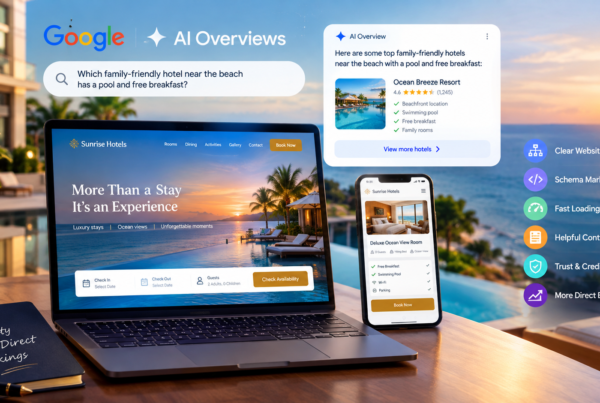
Whether you’re a startup launching your first online store or an established company planning a large-scale ecommerce platform, this guide will help you understand the real costs, avoid unexpected expenses, and choose the best solution for your business. It is also optimized to answer common questions users ask about ecommerce website development cost in India, making it useful for both readers and AI-powered search experiences such as Google AI Overviews and Featured Snippets.
India’s Ecommerce Industry Is Growing Faster Than Ever
India is one of the fastest-growing ecommerce markets in the world, creating exciting opportunities for startups, small businesses, and large enterprises. As more people shop online every day, businesses are investing in ecommerce website development in India to reach a larger audience, increase sales, and stay competitive in the digital economy.
According to the India Brand Equity Foundation (IBEF) Ecommerce Industry Report, India’s ecommerce sector continues to experience strong and steady growth. This growth is fueled by better internet access, affordable smartphones, secure digital payment systems, and a rapidly expanding online customer base. Market insights from Statista’s India Ecommerce Market Report also show that online shopping is becoming a regular part of everyday life for millions of consumers across the country.
For businesses, this means there has never been a better time to invest in a professional online store development or custom ecommerce website.
Why Is India’s Ecommerce Market Growing So Fast?
Several key factors are driving the rapid growth of digital commerce across India:
- More Internet Users: Affordable mobile data and expanding broadband coverage have connected millions of new users to the internet, increasing online shopping across urban and rural areas.
- UPI and Digital Payments: Fast and secure payment methods such as UPI, mobile wallets, and online banking have made digital transactions easier than ever. The National Payments Corporation of India (NPCI) reports continuous growth in UPI transactions every year.
- Affordable Smartphones: Lower smartphone prices have made online shopping accessible to more consumers, helping ecommerce businesses reach new markets.
- Growing Middle-Class Spending: Rising incomes and changing shopping habits have increased consumer demand for online products across categories such as fashion, electronics, groceries, healthcare, and home essentials.
- Government Digital Initiatives: Programs like Digital India have improved digital infrastructure, encouraged online services, and supported business digitization.
- Better Logistics and Delivery Networks: Faster shipping, improved warehousing, and nationwide delivery services have made ecommerce more reliable for both businesses and customers.
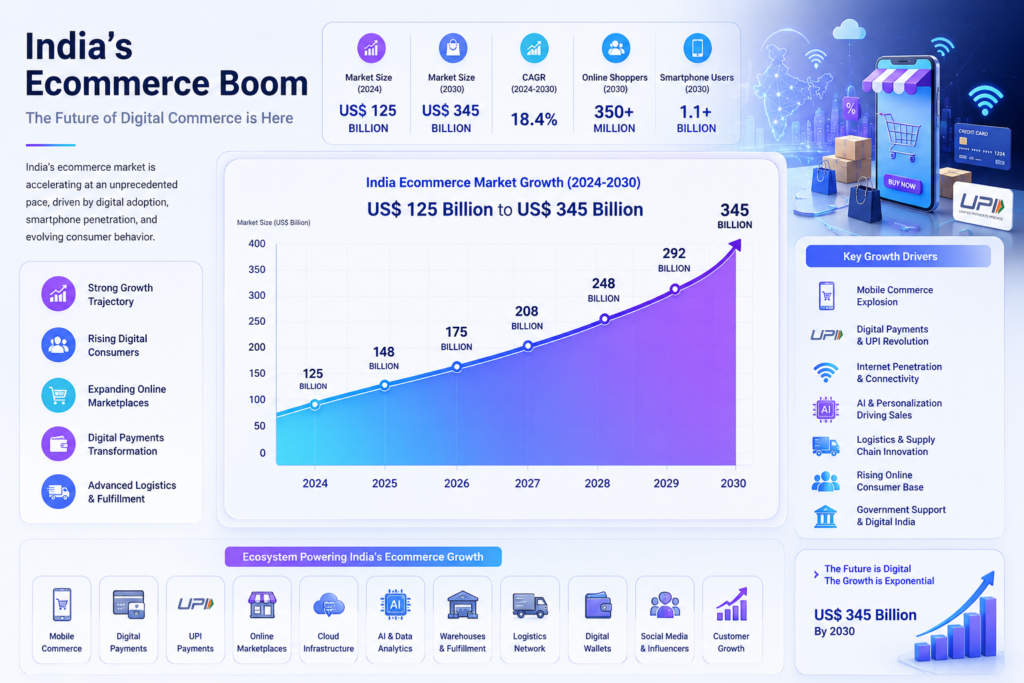
These trends continue to increase demand for ecommerce website development services, Shopify development, WooCommerce development, and custom ecommerce solutions across India.
India Ecommerce Market at a Glance
| Market Metric | Latest Data |
| Ecommerce Market Size (2024) | US$125 Billion |
| Expected Market Size (2030) | US$345 Billion |
| Primary Growth Driver | Digital Commerce |
| Fastest-Growing Segment | Mobile Commerce (M-Commerce) |
| Most Popular Payment Methods | UPI, Digital Wallets, and Online Banking |
Source: India Brand Equity Foundation (IBEF) Ecommerce Industry Report
What This Means for Businesses
As India’s ecommerce industry continues to expand, businesses of all sizes have an opportunity to build a strong online presence. Whether you’re launching your first online store or upgrading an existing ecommerce platform, investing in a modern, secure, and scalable website can help you attract more customers, improve conversions, and support long-term business growth.
With consumer expectations continuing to rise, choosing the right ecommerce platform, implementing a mobile-friendly design, offering secure payment options, and optimizing for search engines are no longer optional—they are essential for success in today’s competitive digital marketplace.
By understanding current market trends and customer behavior, businesses can make smarter decisions about ecommerce website development costs in India and build an online store that is ready for future growth.
Average Ecommerce Website Development Cost in India (2026)
One of the most common questions business owners ask is, “How much does ecommerce website development cost in India?” The answer depends on the size of your business, the features you need, the platform you choose, and the level of customization required.
There is no fixed price for building an online store. A simple ecommerce website with basic features will cost much less than a fully customized enterprise platform with advanced integrations, AI-powered features, or multi-vendor functionality.
According to industry insights from Shopify, Adobe Commerce (Magento), and the India Brand Equity Foundation (IBEF), businesses should choose a website solution based on their current needs while keeping future growth and scalability in mind.
The following pricing estimates represent website development costs only and are based on the latest market trends for 2026.
Average Ecommerce Website Development Cost by Website Type
| Website Type | Estimated Development Cost | Best For |
| Basic Business Website | ₹10,000 – ₹50,000 | Small businesses, local services, startups |
| Small Ecommerce Store | ₹50,000 – ₹1.5 Lakh | Small online stores with up to 100 products |
| Medium Ecommerce Website | ₹1.5 Lakh – ₹5 Lakh | Growing businesses with advanced features |
| Enterprise Ecommerce Platform | ₹5 Lakh – ₹20 Lakh+ | Large brands with custom requirements |
| Multi-Vendor Marketplace | ₹10 Lakh – ₹1 Crore+ | Marketplace businesses similar to Amazon or Etsy |
Note: These estimates cover website design and development only. Additional expenses such as hosting, domain registration, maintenance, premium plugins, payment gateway fees, SEO, and digital marketing are usually billed separately.
1. Basic Business Website (₹10,000 – ₹50,000)
A basic business website is ideal for companies that want to establish an online presence without selling products directly. These websites usually include company information, service pages, contact forms, and basic branding.
Typical features include:
- Responsive website design
- About Us page
- Services pages
- Contact form
- Google Maps integration
- Basic SEO setup
- Mobile-friendly layout
- SSL security
This option is perfect for local businesses, consultants, agencies, healthcare providers, educational institutions, and startups that are just beginning their digital journey.
2. Small Ecommerce Store (₹50,000 – ₹1.5 Lakh)
A small ecommerce website is designed for businesses selling products online with essential ecommerce functionality. It is one of the most popular choices for startups and small businesses.
Common features include:
- Product catalog
- Shopping cart
- Secure checkout
- Payment gateway integration
- Order management
- Customer accounts
- Product search
- Basic inventory management
- Mobile optimization
Platforms such as Shopify and WooCommerce are commonly used for this type of ecommerce website because they offer affordable development costs and easy management.
3. Medium Ecommerce Website (₹1.5 Lakh – ₹5 Lakh)
As your business grows, your website needs more advanced functionality. Medium-sized ecommerce websites are built for businesses with larger product catalogs, higher traffic, and more complex business operations.
These websites often include:
- Custom website design
- Advanced product filters
- Customer dashboards
- Wishlist functionality
- Product reviews
- Multiple payment gateways
- Shipping integrations
- Coupon and discount systems
- Advanced SEO optimization
- Analytics and reporting
- Email marketing integration
This investment provides greater flexibility, improved user experience, and better scalability for growing businesses.
4. Enterprise Ecommerce Platform (₹5 Lakh – ₹20 Lakh+)
Enterprise ecommerce websites are designed for large businesses handling thousands of products, high website traffic, and complex business processes.
These platforms typically include:
- Fully custom development
- ERP integration
- CRM integration
- Advanced inventory management
- Multi-location inventory
- AI-powered product recommendations
- High-level security
- Performance optimization
- API integrations
- Role-based user access
- Business intelligence dashboards
Large organizations often choose platforms like Adobe Commerce (Magento) because they provide enterprise-grade performance, security, and scalability.
5. Multi-Vendor Marketplace (₹10 Lakh – ₹1 Crore+)
A multi-vendor marketplace is the most complex type of ecommerce platform. Instead of selling products from a single business, multiple vendors can register, manage their stores, list products, and receive payments through one marketplace.
Common examples include Amazon, Etsy, and Flipkart.
Marketplace features include:
- Vendor registration
- Vendor dashboards
- Product approval system
- Commission management
- Multiple payment settlements
- Customer reviews
- Order tracking
- Advanced search
- Vendor analytics
- Admin management panel
- Tax management
- Shipping integrations
Because these platforms require extensive custom development, security, and ongoing maintenance, they have the highest development costs.
What Is Included in the Development Cost?
The pricing above generally includes:
- Website planning
- UI/UX design
- Front-end development
- Back-end development
- Database setup
- Product management system
- Basic testing
- Website deployment
- Initial technical support
Additional Costs You Should Budget For
Many businesses focus only on development costs and overlook ongoing expenses. To calculate the total ecommerce website cost in India, you should also budget for:
- Domain registration
- Web hosting
- SSL certificates
- Payment gateway transaction fees
- Premium themes and plugins
- Website maintenance
- Security monitoring
- Content creation
- Technical SEO
- Digital marketing
- Performance optimization
- Software updates
- Backup and disaster recovery
These recurring expenses are essential for keeping your ecommerce website secure, fast, and competitive.
Expert Tip
When comparing ecommerce website development costs in India, don’t choose a solution based only on the lowest price. Instead, focus on long-term value, website performance, scalability, security, SEO readiness, and future business growth. A professionally developed ecommerce website may require a higher initial investment, but it can deliver better customer experience, higher conversion rates, and stronger return on investment over time.
Ecommerce Website Cost by Platform
Choosing the right ecommerce platform is one of the biggest decisions you’ll make when building an online store. The platform you select directly affects your ecommerce website development cost in India, website performance, scalability, security, maintenance, and long-term business growth.
There is no single platform that works for every business. Some platforms are designed for startups that need a quick launch, while others are built for growing businesses or large enterprises that require advanced features and complete customization.
Popular ecommerce platforms like Shopify, WooCommerce, Adobe Commerce (Magento), and custom-built solutions each offer different pricing, flexibility, and functionality.
The sections below explain the development cost, key features, advantages, and ideal use cases for each platform, helping you choose the best option for your business and budget.
1. Shopify Development Cost in India
For many startups and small businesses, Shopify website development is one of the fastest and easiest ways to launch an online store. Shopify is a fully hosted ecommerce platform, which means you don’t need to worry about server management, software updates, or website security. Everything is managed by Shopify, allowing business owners to focus on selling products instead of handling technical tasks.
According to the Shopify Official Website, millions of businesses worldwide use Shopify because of its ease of use, reliable hosting, secure checkout, and extensive app ecosystem. It is especially popular among businesses that want to launch quickly with minimal maintenance.
Average Shopify Development Cost in India
| Development Level | Estimated Cost |
| Basic Shopify Setup | ₹30,000 – ₹50,000 |
| Professional Shopify Store | ₹80,000 – ₹2.5 Lakh |
| Advanced Custom Shopify Store | ₹2.5 Lakh+ |
Note: These estimates cover website design and development only. Shopify subscription plans, premium themes, paid apps, payment gateway charges, and ongoing maintenance are additional costs.
What Is Included in a Basic Shopify Store?
A basic Shopify ecommerce website usually includes everything needed to start selling products online.
Typical features include:
- Professional homepage
- Product catalog
- Collection pages
- Shopping cart
- Secure checkout
- Payment gateway integration
- Shipping setup
- Mobile-responsive design
- Basic SEO setup
- Contact page
- Policy pages
- Basic speed optimization
This package is ideal for businesses launching their first ecommerce website.
What Is Included in a Professional Shopify Store?
As your business grows, you may need more advanced features to improve customer experience and increase sales.
Professional Shopify development often includes:
- Custom website design
- Premium Shopify theme customization
- Advanced navigation
- Product filtering
- Wishlist functionality
- Customer accounts
- Product reviews
- Discount and coupon systems
- Blog integration
- Email marketing integration
- Basic analytics
- Enhanced SEO optimization
- Speed optimization
This option is suitable for businesses expecting higher traffic and larger product catalogs.
What Is Included in an Advanced Custom Shopify Store?
Large brands often require features beyond Shopify’s standard functionality. In these cases, developers build custom solutions using Shopify APIs and advanced integrations.
An advanced Shopify ecommerce website may include:
- Completely custom UI/UX design
- Shopify Plus development
- Custom applications
- ERP integration
- CRM integration
- Warehouse management integration
- Inventory synchronization
- Subscription-based products
- B2B ecommerce functionality
- Multi-store management
- Multi-language support
- Multi-currency support
- AI-powered product recommendations
- Advanced reporting dashboards
These enterprise-level features require more development time, which increases the overall project cost.
Which Businesses Should Choose Shopify?
Shopify is an excellent choice for businesses that want a reliable, secure, and easy-to-manage ecommerce platform without investing heavily in technical infrastructure.
It works especially well for:
- Fashion and apparel brands
- Direct-to-Consumer (D2C) brands
- Electronics stores
- Beauty and skincare businesses
- Health and wellness brands
- Home decor stores
- Jewelry businesses
- Food and beverage brands
- Small and medium-sized businesses
- Startup ecommerce companies
Advantages of Shopify
Many businesses choose Shopify because it offers an excellent balance between affordability, simplicity, and scalability.
Some of its biggest advantages include:
- Fast website launch
- Easy-to-use admin dashboard
- Secure cloud hosting
- Automatic software updates
- Built-in SSL security
- Mobile-friendly themes
- Large app marketplace
- Reliable customer support
- Excellent website performance
- Built-in payment options
- Strong SEO features
- Easy product management
These benefits make Shopify one of the most popular ecommerce platforms for businesses that want to grow without managing complex technical infrastructure.
Factors That Affect Shopify Development Cost
Several factors influence the final Shopify website development cost in India, including:
- Number of products
- Custom website design
- Premium Shopify themes
- Custom app development
- Third-party integrations
- Payment gateway setup
- Shipping integrations
- SEO optimization
- Speed optimization
- Product migration
- Multi-language functionality
- Multi-currency support
- Custom checkout features
- Shopify Plus implementation
The more customization your business requires, the higher the overall development cost.
Is Shopify Worth the Investment?
For startups and growing businesses, Shopify offers one of the best returns on investment. It reduces technical complexity, shortens development time, and provides a secure platform that can scale as your business grows.
If your goal is to launch quickly, minimize maintenance, and focus on selling products rather than managing servers or software updates, Shopify is one of the strongest ecommerce platforms available today.
2. WooCommerce Development Cost in India
If you’re looking for a powerful, flexible, and budget-friendly ecommerce solution, WooCommerce development is one of the best choices available. Built on WordPress, WooCommerce is the world’s most popular open-source ecommerce platform, giving businesses complete control over their online store without the high licensing costs associated with many enterprise platforms.
According to the WooCommerce Official Website, WooCommerce is designed to help businesses create fully customizable online stores while taking advantage of WordPress’s powerful content management and SEO capabilities. This makes it an excellent option for businesses that want to grow organically through search engines while keeping development costs under control.
Compared to many hosted ecommerce platforms, WooCommerce website development in India generally offers a lower total cost of ownership because there are no mandatory monthly platform fees. However, businesses should still budget for hosting, premium themes, plugins, security, and ongoing maintenance.
Average WooCommerce Development Cost in India
| Store Type | Estimated Development Cost |
| Basic WooCommerce Store | ₹20,000 – ₹50,000 |
| Professional WooCommerce Store | ₹80,000 – ₹2 Lakh |
| Fully Customized WooCommerce Store | ₹2 Lakh+ |
Note: These estimates cover website design and development only. Additional expenses such as web hosting, domain registration, premium plugins, payment gateway fees, SSL certificates, website maintenance, and digital marketing are separate.
What Is Included in a Basic WooCommerce Store?
A basic WooCommerce website provides everything a small business needs to start selling products online.
Typical features include:
- WordPress installation
- WooCommerce setup
- Mobile-responsive website
- Product catalog
- Shopping cart
- Secure checkout
- Payment gateway integration
- Shipping setup
- Contact page
- Basic SEO optimization
- SSL security
- Product categories
- Order management
This package is ideal for startups and small businesses launching their first ecommerce website.
What Is Included in a Professional WooCommerce Store?
Growing businesses often need more advanced ecommerce features to improve customer experience and increase online sales.
A professional WooCommerce website may include:
- Custom UI/UX design
- Premium WordPress theme customization
- Advanced product filtering
- Customer accounts
- Wishlist functionality
- Product reviews and ratings
- Coupon and discount management
- Multiple payment gateways
- Advanced shipping options
- Email marketing integration
- Inventory management
- Speed optimization
- Technical SEO optimization
- Google Analytics integration
This type of website is well suited for businesses experiencing steady growth and increasing online traffic.
What Is Included in a Fully Customized WooCommerce Store?
Large businesses or brands with unique requirements often choose custom WooCommerce development to create a highly personalized ecommerce experience.
Advanced WooCommerce projects may include:
- Fully custom website design
- Custom plugin development
- ERP integration
- CRM integration
- Warehouse management integration
- API development
- Multi-vendor functionality
- Subscription products
- Membership systems
- Multi-language support
- Multi-currency support
- AI-powered product recommendations
- Advanced reporting dashboards
- Business automation
- Headless WooCommerce architecture
Because these projects require significant custom development, they typically cost ₹2 lakh or more, depending on complexity.
Which Businesses Should Choose WooCommerce?
WooCommerce is one of the best ecommerce platforms for businesses that want complete flexibility, ownership, and excellent SEO performance.
It is especially suitable for:
- WordPress website owners
- Small and medium-sized businesses (SMEs)
- Growing ecommerce brands
- SEO-focused businesses
- Bloggers selling products
- Service-based businesses with online sales
- Local retailers expanding online
- B2B ecommerce businesses
- Companies requiring custom functionality
Advantages of WooCommerce
WooCommerce remains one of the most popular ecommerce platforms because it offers flexibility, scalability, and complete ownership of your website.
Key advantages include:
- Free and open-source platform
- Full ownership of your website and data
- Highly customizable design and functionality
- Thousands of plugins and extensions
- Excellent SEO capabilities
- Easy content management with WordPress
- Large developer community
- Flexible payment gateway options
- Scalable for growing businesses
- No mandatory monthly platform subscription
These benefits make WooCommerce a preferred choice for businesses that want long-term flexibility and greater control over their ecommerce website.
Factors That Affect WooCommerce Development Cost
The final WooCommerce website development cost in India depends on several factors, including:
- Number of products
- Custom website design
- Premium WordPress themes
- Premium WooCommerce plugins
- Custom plugin development
- Payment gateway integration
- Shipping and logistics integration
- Product migration
- API integrations
- Website speed optimization
- Technical SEO implementation
- Security enhancements
- Multi-language support
- Multi-currency functionality
- Ongoing maintenance and support
The more advanced features and customizations you require, the higher the overall development cost.
Is WooCommerce Worth the Investment?
For businesses that want flexibility, scalability, and strong search engine visibility, WooCommerce is one of the best long-term investments. Since it is built on WordPress, it combines powerful ecommerce functionality with industry-leading content management and SEO capabilities, making it an excellent choice for businesses focused on organic growth.
If you want complete control over your online store, the ability to customize every aspect of your website, and the flexibility to scale as your business grows, WooCommerce development in India offers outstanding value for money.
3. Magento (Adobe Commerce) Development Cost in India
When businesses need a powerful, scalable, and feature-rich ecommerce platform, Adobe Commerce (formerly Magento) is one of the top choices. It is built for companies that manage large product catalogs, handle thousands of daily visitors, and require advanced ecommerce features, custom workflows, and enterprise-level security.
According to Adobe Commerce (Magento), Adobe Commerce is designed to deliver personalized shopping experiences, support complex business operations, and help brands scale globally. It offers advanced tools for B2B and B2C ecommerce, AI-powered merchandising, business intelligence, and seamless integrations with enterprise software.
Because of its flexibility and enterprise capabilities, Magento website development in India typically costs more than platforms like Shopify or WooCommerce. However, it is an excellent long-term investment for businesses that need complete customization, high performance, and the ability to grow without platform limitations.
Average Magento Development Cost in India
| Store Type | Estimated Development Cost |
| Basic Magento Store | ₹1 Lakh – ₹2.5 Lakh |
| Enterprise Magento Store | ₹7.5 Lakh+ |
Note: These estimates include website design and development only. Additional costs such as Adobe Commerce licensing (where applicable), cloud hosting, premium extensions, maintenance, security, third-party integrations, and ongoing technical support are separate.
What Is Included in a Basic Magento Store?
A basic Magento ecommerce website is suitable for medium-sized businesses that need more flexibility than standard ecommerce platforms.
Typical features include:
- Professional website design
- Product catalog management
- Shopping cart
- Secure checkout
- Payment gateway integration
- Shipping integration
- Customer accounts
- Mobile-responsive design
- Basic SEO optimization
- Product search
- Inventory management
- SSL security
This package provides a strong foundation for businesses planning to expand their online operations.
What Is Included in an Enterprise Magento Store?
Large organizations often require highly customized ecommerce solutions that support complex business processes, multiple customer groups, and international operations.
An enterprise Magento website may include:
- Fully custom UI/UX design
- Multi-store management
- Multi-language support
- Multi-currency functionality
- B2B ecommerce features
- Customer-specific pricing
- Bulk ordering
- Advanced product management
- ERP integration
- CRM integration
- Warehouse management integration
- AI-powered product recommendations
- Personalized shopping experiences
- Advanced analytics and reporting
- API integrations
- Business automation
- High-performance cloud infrastructure
- Enterprise-grade security
These advanced capabilities require experienced Magento developers and significantly increase development time and project cost.
Which Businesses Should Choose Magento?
Adobe Commerce is best suited for businesses that expect high traffic, large product inventories, and complex ecommerce operations.
It is an excellent choice for:
- Large ecommerce businesses
- Enterprise organizations
- B2B companies
- Manufacturers
- Wholesale businesses
- International brands
- Multi-store retailers
- Businesses with thousands of products
- Companies requiring advanced customization
- Businesses planning global expansion
Advantages of Magento (Adobe Commerce)
Magento is trusted by many global brands because it offers exceptional flexibility and enterprise-level capabilities.
Some of its biggest advantages include:
- Highly scalable architecture
- Unlimited customization options
- Powerful product management
- Advanced SEO features
- Multi-store support
- Multi-language capability
- Multi-currency support
- Enterprise-level security
- AI-powered personalization
- Flexible API integrations
- Strong B2B ecommerce functionality
- Excellent performance for high-traffic websites
- Cloud deployment options
- Advanced analytics and reporting
These features make Magento one of the most powerful ecommerce platforms available for large and growing businesses.
Factors That Affect Magento Development Cost
The final Magento website development cost in India depends on several technical and business requirements, including:
- Number of products
- Custom website design
- Adobe Commerce edition
- Custom module development
- Third-party integrations
- ERP and CRM integration
- Payment gateway integration
- Shipping and logistics integration
- Product migration
- Performance optimization
- Security implementation
- API development
- Multi-store setup
- International ecommerce support
- Ongoing maintenance and technical support
Projects with advanced customization, enterprise integrations, and high-performance infrastructure generally require a larger investment.
Is Magento Worth the Investment?
If your business needs a highly scalable ecommerce platform capable of handling large product catalogs, complex business processes, and high website traffic, Adobe Commerce (Magento) is one of the strongest solutions available.
While the initial Magento development cost in India is higher than Shopify or WooCommerce, it offers unmatched flexibility, enterprise-grade performance, and long-term scalability. For medium to large businesses planning sustained growth, the investment can provide significant value through improved efficiency, better customer experiences, and the ability to support expanding operations.
4. Custom Ecommerce Development Cost in India
If your business has unique requirements that standard ecommerce platforms cannot support, custom ecommerce development is the best solution. Unlike platforms such as Shopify or WooCommerce, a custom-built ecommerce website is designed specifically for your business, giving you complete control over features, design, performance, security, and future scalability.
A custom ecommerce website is built from the ground up to match your business processes instead of forcing your business to adapt to a platform’s limitations. This makes it the preferred choice for companies with complex workflows, custom integrations, enterprise operations, or plans for rapid growth.
Modern development frameworks such as React, Next.js, Node.js, Laravel, ASP.NET Core, and Headless Commerce architectures are commonly used to build fast, secure, and scalable ecommerce platforms.
Average Custom Ecommerce Development Cost in India
| Project Type | Estimated Development Cost |
| Basic Custom Ecommerce Store | ₹1.5 Lakh – ₹3 Lakh |
| Enterprise Custom Ecommerce Solution | ₹10 Lakh – ₹50 Lakh+ |
Note: These estimates include website planning, UI/UX design, development, testing, and deployment. Additional costs such as cloud hosting, third-party APIs, maintenance, security monitoring, software licensing, and ongoing support are usually charged separately.
What Is Included in a Basic Custom Ecommerce Store?
A basic custom ecommerce website is designed for businesses that need more flexibility than standard ecommerce platforms while keeping development costs reasonable.
Typical features include:
- Custom website design
- Mobile-responsive interface
- Product catalog management
- Shopping cart
- Secure checkout
- Payment gateway integration
- Shipping integration
- Customer accounts
- Order management
- Inventory management
- Product search
- Basic SEO optimization
- Admin dashboard
- SSL security
This solution is ideal for businesses that require custom branding or unique workflows that cannot be achieved using ready-made themes or plugins.
What Is Included in an Enterprise Custom Ecommerce Solution?
Enterprise-level ecommerce platforms are designed for organizations with complex business operations, multiple departments, and high transaction volumes.
A fully customized enterprise ecommerce website may include:
- Completely custom UI and UX design
- Advanced admin dashboard
- ERP integration
- CRM integration
- Warehouse management integration
- Inventory synchronization
- Vendor management
- Multi-store functionality
- Multi-language support
- Multi-currency support
- AI-powered product recommendations
- Personalized shopping experiences
- Subscription and membership systems
- Advanced reporting dashboards
- Business automation
- API development
- Customer-specific pricing
- High-performance cloud infrastructure
- Enterprise-level security
- Custom analytics and reporting
These projects require experienced developers, solution architects, designers, QA engineers, and DevOps specialists, making them significantly more expensive than standard ecommerce websites.
Common Technologies Used in Custom Ecommerce Development
Professional development teams use modern technologies to build secure, scalable, and high-performing ecommerce platforms.
Some of the most popular technologies include:
- React for fast and interactive user interfaces
- Next.js for server-side rendering, SEO, and high-performance web applications
- Node.js for scalable backend development
- Laravel for secure PHP-based ecommerce applications
- ASP.NET Core for enterprise-grade business applications
- Commerce Layer Headless Commerce Guide for API-first ecommerce architecture
These technologies allow developers to create highly customized ecommerce websites that are faster, more secure, and easier to scale.
Who Should Choose Custom Ecommerce Development?
Custom ecommerce development is the right choice for businesses that need complete flexibility and long-term scalability.
It is ideal for:
- Large enterprises
- Fast-growing ecommerce brands
- B2B ecommerce businesses
- Manufacturers
- Wholesale distributors
- Multi-vendor marketplaces
- Businesses with unique workflows
- Subscription-based businesses
- Companies requiring advanced integrations
- Global ecommerce businesses
Advantages of Custom Ecommerce Development
A custom-built ecommerce website offers many advantages over template-based platforms.
Key benefits include:
- Complete ownership of your website
- Fully customized design and functionality
- Unlimited scalability
- Faster website performance
- Better security and compliance
- Easy integration with ERP, CRM, and third-party software
- Improved user experience
- Advanced SEO optimization
- Flexible API integrations
- AI and automation capabilities
- No platform limitations
- Better long-term return on investment
These advantages make custom development the preferred option for businesses that expect rapid growth or have specialized operational requirements.
Factors That Affect Custom Ecommerce Development Cost
The final custom ecommerce website development cost in India depends on several important factors, including:
- Website complexity
- Number of products
- Custom UI/UX design
- Front-end and back-end development
- Technology stack
- Third-party API integrations
- ERP and CRM integration
- Payment gateway setup
- Shipping and logistics integration
- AI-powered features
- Search functionality
- Mobile application integration
- Security requirements
- Cloud infrastructure
- Performance optimization
- Testing and quality assurance
- Ongoing maintenance and support
The more advanced the functionality, the greater the development time and overall project investment.
Is Custom Ecommerce Development Worth the Investment?
If your business needs features that cannot be delivered by standard ecommerce platforms, custom development offers the highest level of flexibility and long-term value. Although the initial investment is higher, a custom-built ecommerce website can improve operational efficiency, support future growth, and provide a better customer experience without the limitations of pre-built platforms.
For businesses planning to scale, automate processes, or integrate with enterprise systems, custom ecommerce development in India is often the most cost-effective solution over the long term because it is built specifically around your business goals rather than adapting your business to fit a predefined platform.
Headless Commerce Development Cost in India (2026)
As businesses grow and customer expectations continue to rise, many companies are moving beyond traditional ecommerce platforms and investing in headless commerce development. This modern approach gives businesses greater flexibility, faster website performance, and the ability to deliver a seamless shopping experience across multiple digital channels.
Unlike traditional ecommerce platforms, where the front-end (what customers see) and the back-end (where products, orders, and data are managed) are connected, headless commerce separates these two layers. This allows developers to build a completely custom storefront while using powerful backend commerce systems through APIs.
According to Commerce Layer’s Headless Commerce Guide and Shopify Headless Commerce, headless commerce has become one of the fastest-growing ecommerce architectures because it offers better performance, greater flexibility, and easier integration with modern technologies.
For businesses planning long-term digital growth, headless ecommerce development provides the freedom to deliver exceptional customer experiences across websites, mobile apps, marketplaces, social media, kiosks, and other digital touchpoints.
Average Headless Commerce Development Cost in India
The headless commerce development cost in India depends on your business size, technology stack, integrations, and customization requirements.
| Project Type | Estimated Development Cost |
| Basic Headless Commerce Store | ₹8 Lakh – ₹15 Lakh |
| Enterprise Headless Commerce Platform | ₹40 Lakh+ |
Note: These estimates include UI/UX design, frontend and backend development, API integration, testing, and deployment. Additional expenses such as cloud hosting, CMS licensing, maintenance, security monitoring, third-party services, and ongoing technical support are typically billed separately.
What Is Included in a Basic Headless Commerce Store?
A basic headless ecommerce solution is suitable for growing businesses that want faster performance and greater flexibility than traditional ecommerce platforms.
Typical features include:
- Custom frontend development
- API-based architecture
- Mobile-responsive design
- Product catalog management
- Shopping cart
- Secure checkout
- Payment gateway integration
- Shipping integration
- Customer account management
- Content management system (CMS)
- Basic SEO optimization
- Performance optimization
- SSL security
This solution works well for businesses looking to improve website speed and user experience while preparing for future growth.
What Is Included in an Enterprise Headless Commerce Platform?
Enterprise businesses often require advanced ecommerce capabilities that support multiple brands, sales channels, and global operations.
A fully customized enterprise headless commerce platform may include:
- Completely custom user interface
- Multi-store management
- Omnichannel commerce
- Mobile app integration
- Progressive Web App (PWA)
- AI-powered product recommendations
- Personalized shopping experiences
- ERP integration
- CRM integration
- Inventory management
- Warehouse management
- Product Information Management (PIM)
- Multi-language support
- Multi-currency support
- Advanced analytics
- API-first architecture
- Cloud-native infrastructure
- Enterprise-grade security
- High-performance content delivery
These enterprise solutions require specialized development teams, solution architects, and DevOps engineers, making them one of the highest-cost ecommerce investments.
Why Are Businesses Choosing Headless Commerce?
Headless commerce is becoming increasingly popular because it gives businesses complete freedom to build better digital experiences without the limitations of traditional ecommerce platforms.
Some of the biggest advantages include:
Faster Website Performance Since the frontend and backend work independently, pages load much faster, improving user experience and conversion rates.
Better Scalability As your business grows, you can add new features, sales channels, and integrations without rebuilding your entire ecommerce platform.
Omnichannel Selling A single backend can power multiple customer touchpoints, including:
- Ecommerce websites
- Mobile applications
- Marketplaces
- Social media stores
- Smart devices
- Digital kiosks
- Voice commerce
This creates a consistent shopping experience across every platform.
Superior Customer Experience Developers have complete freedom to design unique, high-performing user experiences without being restricted by traditional ecommerce templates.
Greater Flexibility Businesses can choose the best frontend frameworks, backend systems, CMS platforms, and cloud services based on their specific requirements.
Easier Third-Party Integrations Headless architecture makes it easier to connect with:
- ERP systems
- CRM software
- Payment gateways
- Shipping providers
- Marketing automation platforms
- AI tools
- Analytics platforms
Common Technologies Used in Headless Commerce Development
Modern headless ecommerce platforms are built using advanced technologies that improve speed, flexibility, and scalability.
Popular technologies include:
- React
- Next.js
- Node.js
- Commerce Layer
- Shopify Headless Commerce
- BigCommerce Headless Commerce
- Contentful Headless CMS
These technologies allow businesses to build modern ecommerce platforms that are fast, scalable, and ready for future innovation.
Which Businesses Should Choose Headless Commerce?
Headless commerce is best suited for organizations that need advanced customization and plan to grow across multiple digital channels.
It is an excellent choice for:
- Enterprise businesses
- Global ecommerce brands
- High-growth startups
- B2B ecommerce companies
- D2C brands
- Retail chains
- Multi-brand businesses
- Businesses with mobile apps
- Companies with high website traffic
- Organizations planning international expansion
Factors That Affect Headless Commerce Development Cost
The final headless commerce development cost in India depends on several important factors, including:
- Frontend framework selection
- Backend commerce platform
- Number of APIs
- Custom UI/UX design
- CMS integration
- ERP and CRM integration
- Cloud infrastructure
- Product catalog size
- AI-powered features
- Mobile application development
- Performance optimization
- Security implementation
- Third-party integrations
- Testing and quality assurance
- Ongoing maintenance and support
The more integrations and custom functionality your business requires, the higher the overall development cost.
Is Headless Commerce Worth the Investment?
For businesses focused on long-term growth, faster website performance, and delivering seamless customer experiences across multiple channels, headless commerce development is one of the most future-ready ecommerce solutions available.
Although the initial investment is higher than traditional ecommerce platforms, headless commerce offers greater flexibility, better scalability, improved website speed, and the ability to adapt quickly as technology and customer expectations evolve. For enterprise organizations and rapidly growing brands, it can deliver significant long-term value and a stronger return on investment.
Development Cost by Team Structure
When planning an ecommerce website development project, choosing the right development team is just as important as choosing the right platform. Your development partner directly impacts your project cost, website quality, launch timeline, scalability, and long-term support.
There are four common ways to build an ecommerce website: using a DIY website builder, hiring a freelancer, working with a professional ecommerce development agency, or partnering with an enterprise development team. Each option offers different advantages depending on your budget, business goals, and technical requirements.
If you’re building a small online store, a freelancer or website builder may be enough. However, if you’re creating a custom ecommerce platform or planning to scale your business, working with an experienced development agency or enterprise team is usually the better investment.
Ecommerce Website Development Cost by Team Structure
| Development Option | Estimated Cost | Average Timeline | Best For |
| DIY Website Builder | ₹10,000 – ₹50,000 | 1–2 Weeks | Individuals, startups, very small businesses |
| Freelancer | ₹50,000 – ₹2 Lakh | 2–6 Weeks | Small businesses and basic ecommerce stores |
| Professional Ecommerce Agency | ₹1.5 Lakh – ₹10 Lakh+ | 4–12 Weeks | Growing businesses, brands, and SMEs |
| Enterprise Development Team | ₹20 Lakh+ | 3–6 Months | Large enterprises, marketplaces, and global brands |
Note: These estimates are based on development costs only. Additional expenses such as hosting, premium software, third-party integrations, maintenance, SEO, security, and digital marketing are usually charged separately.
1. DIY Website Builder
A DIY website builder is the most affordable way to launch an ecommerce website. Platforms like Shopify, Wix, and Squarespace offer drag-and-drop tools that allow business owners to create an online store without coding.
Estimated Cost: ₹10,000 – ₹50,000 Average Timeline: 1–2 Weeks
Best For
- Startups
- Individual entrepreneurs
- Small online stores
- Local businesses
- Businesses with limited budgets
Advantages
- Lowest development cost
- Quick website launch
- No coding knowledge required
- Easy product management
- Built-in hosting and security
Limitations
- Limited customization
- Fewer advanced features
- Difficult to scale for large businesses
- Limited flexibility for custom integrations
2. Hiring a Freelancer
Hiring a freelance ecommerce developer is a popular option for businesses that need a more professional website without the higher cost of a development agency.
Freelancers can build websites using platforms like Shopify, WooCommerce, Magento, or custom technologies depending on their expertise.
Estimated Cost: ₹50,000 – ₹2 Lakh Average Timeline: 2–6 Weeks
Best For
- Small businesses
- Growing startups
- Local ecommerce brands
- Businesses with moderate customization needs
Advantages
- Lower development cost
- More flexibility than DIY builders
- Faster communication
- Personalized development
Limitations
- Limited team resources
- May not offer long-term support
- Project timelines depend on one person
- Complex projects can become challenging
3. Professional Ecommerce Development Agency
For businesses that need a high-quality ecommerce website with professional design, strong security, and long-term support, working with an ecommerce development agency is often the best choice.
A professional agency usually has a complete team that includes project managers, UI/UX designers, frontend developers, backend developers, QA engineers, SEO specialists, and support staff.
Estimated Cost: ₹1.5 Lakh – ₹10 Lakh+ Average Timeline: 4–12 Weeks
Best For
- Small and medium-sized businesses (SMEs)
- D2C brands
- Retail companies
- Businesses planning long-term growth
- Companies requiring custom ecommerce solutions
Advantages
- Professional project management
- High-quality website design
- Experienced development team
- Better security
- SEO-friendly development
- Faster issue resolution
- Long-term maintenance and support
- Scalable architecture
Limitations
- Higher initial investment than freelancers
- Longer planning and development process
4. Enterprise Development Team
Large organizations often require dedicated enterprise ecommerce development teams to build complex digital commerce platforms.
These teams consist of software architects, business analysts, frontend developers, backend developers, DevOps engineers, cybersecurity specialists, QA engineers, cloud experts, AI engineers, and project managers.
Enterprise development is commonly used for large ecommerce platforms, B2B portals, multi-vendor marketplaces, and international ecommerce businesses.
Estimated Cost: ₹20 Lakh+ Average Timeline: 3–6 Months
Best For
- Enterprise organizations
- Global ecommerce brands
- B2B businesses
- Large retailers
- Marketplace platforms
- Businesses with advanced integrations
Advantages
- Enterprise-grade architecture
- Complete customization
- Advanced security
- Cloud-native infrastructure
- High scalability
- AI integration
- ERP and CRM integration
- Long-term technical support
- Excellent performance for high-traffic websites
Limitations
- Highest development cost
- Longer project timeline
- Requires detailed planning and project management
Which Development Option Is Right for You?
The best development approach depends on your business size, budget, and long-term goals.
- DIY Website Builder – Best if you need a simple online store quickly and have a limited budget.
- Freelancer – A good option for startups and small businesses that need a custom website at a reasonable cost.
- Professional Ecommerce Agency – Ideal for businesses looking for a scalable, secure, and professionally developed ecommerce website.
- Enterprise Development Team – The right choice for organizations building complex ecommerce platforms with advanced integrations and global expansion plans.
Expert Recommendation
If you’re building a business that you expect to grow over the next several years, don’t base your decision on price alone. Consider the team’s experience, technical expertise, communication, post-launch support, and ability to scale your website as your business grows.
For most startups and small businesses, a professional ecommerce agency provides the best balance of quality, cost, and long-term value. Enterprise businesses, however, benefit from dedicated development teams that can deliver highly customized, secure, and scalable ecommerce solutions.
Feature-Wise Development Cost
Each additional feature increases both development effort and project cost.
| Feature | Estimated Cost |
| Product Catalog | ₹10,000–₹30,000 |
| Shopping Cart | ₹15,000–₹40,000 |
| Payment Gateway | ₹10,000–₹50,000 |
| Shipping Integration | ₹10,000–₹40,000 |
| Inventory Management | ₹25,000–₹75,000 |
| Multi-language Support | ₹30,000–₹1 Lakh |
| Multi-Currency | ₹20,000–₹60,000 |
| Customer Dashboard | ₹30,000–₹80,000 |
| Wishlist | ₹10,000–₹25,000 |
| Reviews & Ratings | ₹15,000–₹40,000 |
| AI Product Recommendation | ₹50,000–₹3 Lakh |
| Chatbot Integration | ₹20,000–₹1 Lakh |
Hidden Costs Most Businesses Forget
Many companies underestimate the total cost of ownership. Common recurring expenses include:
| Expense | Annual Cost |
| Domain Name | ₹800–₹2,000 |
| Web Hosting | ₹5,000–₹1 Lakh+ |
| SSL Certificate | ₹0–₹20,000 |
| Website Maintenance | ₹15,000–₹2 Lakh |
| Security Monitoring | ₹10,000–₹1 Lakh |
| CDN Services | ₹5,000–₹50,000 |
| Email Services | ₹2,000–₹20,000 |
| Premium Plugins | ₹5,000–₹1 Lakh |
Ecommerce Website Development Timeline
| Stage | Duration |
| Requirement Analysis | 1 Week |
| UI/UX Design | 1–2 Weeks |
| Development | 3–6 Weeks |
| Testing | 1–2 Weeks |
| Deployment | 3–5 Days |
Average project duration:
- Basic Website: 3–5 Weeks
- Professional Store: 6–10 Weeks
- Enterprise Platform: 3–6 Months
Factors That Affect Ecommerce Website Pricing
Several variables influence the final project budget:
- Number of products
- Custom UI/UX design
- Platform selection
- Payment gateway integration
- ERP/CRM integration
- Mobile responsiveness
- Headless architecture
- Security compliance
- AI features
- SEO optimization
- Performance optimization
- Scalability requirements
- Third-party API integrations
- Maintenance agreements
Latest Ecommerce Development Trends (2026)
Businesses investing in ecommerce are increasingly adopting:
- AI-powered product recommendations
- Voice search optimization
- Headless commerce architecture
- Progressive Web Apps (PWAs)
- Omnichannel retail
- One-click checkout
- UPI and digital wallet integrations
- Hyper-personalization
- AI customer support
- Real-time analytics
Which Platform Should You Choose?
| Business Type | Recommended Platform |
| Startup | Shopify |
| Small Business | WooCommerce |
| Growing Brand | Shopify Plus / WooCommerce |
| Large Enterprise | Adobe Commerce (Magento) |
| Marketplace | Custom Development |
| Global Ecommerce | Headless Commerce |
Expert Recommendation
Choosing the cheapest option is rarely the most cost-effective decision. Instead, evaluate your budget, expected traffic, scalability requirements, integrations, security needs, and long-term maintenance costs. A well-planned ecommerce platform that aligns with your business goals can deliver stronger performance, easier expansion, and a better return on investment over time.
FAQs
How much does an ecommerce website cost in India?
The ecommerce website development cost in India typically ranges from ₹30,000 to ₹50 lakh or more, depending on your business requirements. A basic online store usually costs between ₹30,000 and ₹1.5 lakh, while custom ecommerce websites, enterprise platforms, and multi-vendor marketplaces require a higher investment. Factors such as platform selection, custom features, integrations, design complexity, and ongoing maintenance all influence the final cost.
What is the average ecommerce website development cost in India?
The average ecommerce website development cost in India is between ₹50,000 and ₹5 lakh for most small and medium-sized businesses. Enterprise ecommerce platforms with advanced features like ERP integration, AI-powered recommendations, and multi-vendor functionality can cost ₹10 lakh to ₹50 lakh or more. The total investment depends on your business goals, platform, and required functionality.
How much does it cost to build an online shopping website in India?
Building an online shopping website in India generally costs ₹50,000 to ₹5 lakh, depending on the number of products, design customization, payment gateway integration, shipping features, and scalability requirements. Simple ecommerce websites cost less, while fully customized online stores with advanced business features require a larger investment and longer development timeline.
Is Shopify cheaper than WooCommerce?
In most cases, WooCommerce is cheaper than Shopify over the long term because it is an open-source platform with no mandatory monthly subscription fees. However, WooCommerce requires separate hosting, maintenance, and plugin management. Shopify offers a fully hosted solution with built-in security, hosting, and support, making it easier to manage but with recurring monthly costs. The best choice depends on your budget, technical expertise, and business needs.
How much does Shopify website development cost in India?
The Shopify website development cost in India typically ranges from ₹30,000 to ₹2.5 lakh or more. A basic Shopify store is suitable for startups, while professionally designed stores with custom themes, advanced functionality, and third-party integrations require a higher budget. Businesses also need to consider Shopify subscription plans, premium apps, and transaction fees as part of the total cost.
How much does WooCommerce website development cost in India?
The average WooCommerce website development cost in India ranges from ₹20,000 to ₹2 lakh or more. Small ecommerce stores with standard features are more affordable, while custom WooCommerce websites with advanced integrations, premium plugins, and custom development require a larger investment. WooCommerce is an excellent option for businesses looking for flexibility, ownership, and strong SEO capabilities.
How much does Magento website development cost in India?
The Magento (Adobe Commerce) development cost in India generally starts at ₹1 lakh for basic ecommerce websites and can exceed ₹20 lakh for enterprise-grade solutions. Magento is designed for large businesses that require advanced customization, high performance, complex integrations, and the ability to manage large product catalogs and high website traffic.
What is the cheapest ecommerce platform for startups?
For most startups, WooCommerce is one of the most affordable ecommerce platforms because it is free to use and offers complete flexibility. Shopify is another excellent choice for businesses that prefer an easy-to-manage, fully hosted solution with minimal technical maintenance. The right platform depends on your budget, technical skills, and long-term growth plans.
Which is better: Shopify, WooCommerce, or Magento?
The best ecommerce platform depends on your business requirements. Shopify is ideal for startups and small businesses looking for quick deployment and simple management. WooCommerce is best for businesses that want complete control, flexibility, and strong SEO performance. Magento (Adobe Commerce) is the preferred choice for enterprise organizations that need advanced customization, scalability, and enterprise-level ecommerce capabilities.
Should I choose a custom ecommerce website or Shopify?
Choose Shopify if you want to launch your online store quickly with lower maintenance and built-in hosting. Choose a custom ecommerce website if your business requires unique workflows, advanced integrations, specialized features, or complete control over your platform. Custom development offers greater flexibility and scalability but requires a larger initial investment.
How do I choose the best ecommerce website development company in India?
Choose an ecommerce website development company in India with proven experience, a strong project portfolio, positive client reviews, transparent pricing, and expertise in platforms like Shopify, WooCommerce, Magento, or custom development. Also evaluate their technical capabilities, communication process, post-launch support, SEO knowledge, and ability to build scalable ecommerce solutions that match your business goals.
How much does it cost to hire ecommerce developers in India?
The cost to hire ecommerce developers in India depends on their experience, technology stack, and project complexity. Freelancers typically charge ₹50,000 to ₹2 lakh for small projects, while professional ecommerce development agencies may charge ₹1.5 lakh to ₹10 lakh or more for custom ecommerce websites. Enterprise projects requiring dedicated development teams can cost significantly more.
Should I hire a freelancer or an ecommerce development agency?
A freelancer is a good choice for small ecommerce projects with limited budgets and simple requirements. However, for businesses planning long-term growth, hiring a professional ecommerce development agency provides better project management, higher code quality, stronger security, ongoing technical support, and access to a team of designers, developers, and QA specialists. Agencies are generally better equipped to deliver scalable, business-ready ecommerce solutions.
Why should I hire Indian ecommerce developers?
Many businesses choose Indian ecommerce developers because they offer a strong combination of technical expertise, competitive pricing, and experience working with global clients. Indian development teams have extensive knowledge of Shopify, WooCommerce, Magento, custom ecommerce solutions, cloud technologies, and modern web frameworks. They can deliver high-quality ecommerce websites at a lower cost while maintaining international development standards, making India one of the world’s leading destinations for ecommerce development outsourcing.